Choosing the right food for your dog is one of the most important decisions you can make as a pet owner. A healthy diet supports strong muscles, healthy skin, a shiny coat, good digestion, and steady energy. Many dog owners wonder whether homemade dog food is better than commercial dog food. Both options have advantages and disadvantages, and the best choice depends on your dog’s age, health, activity level, nutritional needs, and your ability to prepare balanced meals.
Understanding the difference between homemade dog food and commercial dog food can help you make a better decision for your pet. This guide explains the benefits, drawbacks, nutritional concerns, and important factors to consider when choosing between these two types of dog food.
What Is Homemade Dog Food?
Homemade dog food is prepared at home using ingredients such as cooked meat, vegetables, rice, eggs, and other foods that are suitable for dogs. Some owners choose homemade meals because they want greater control over what their dogs eat.
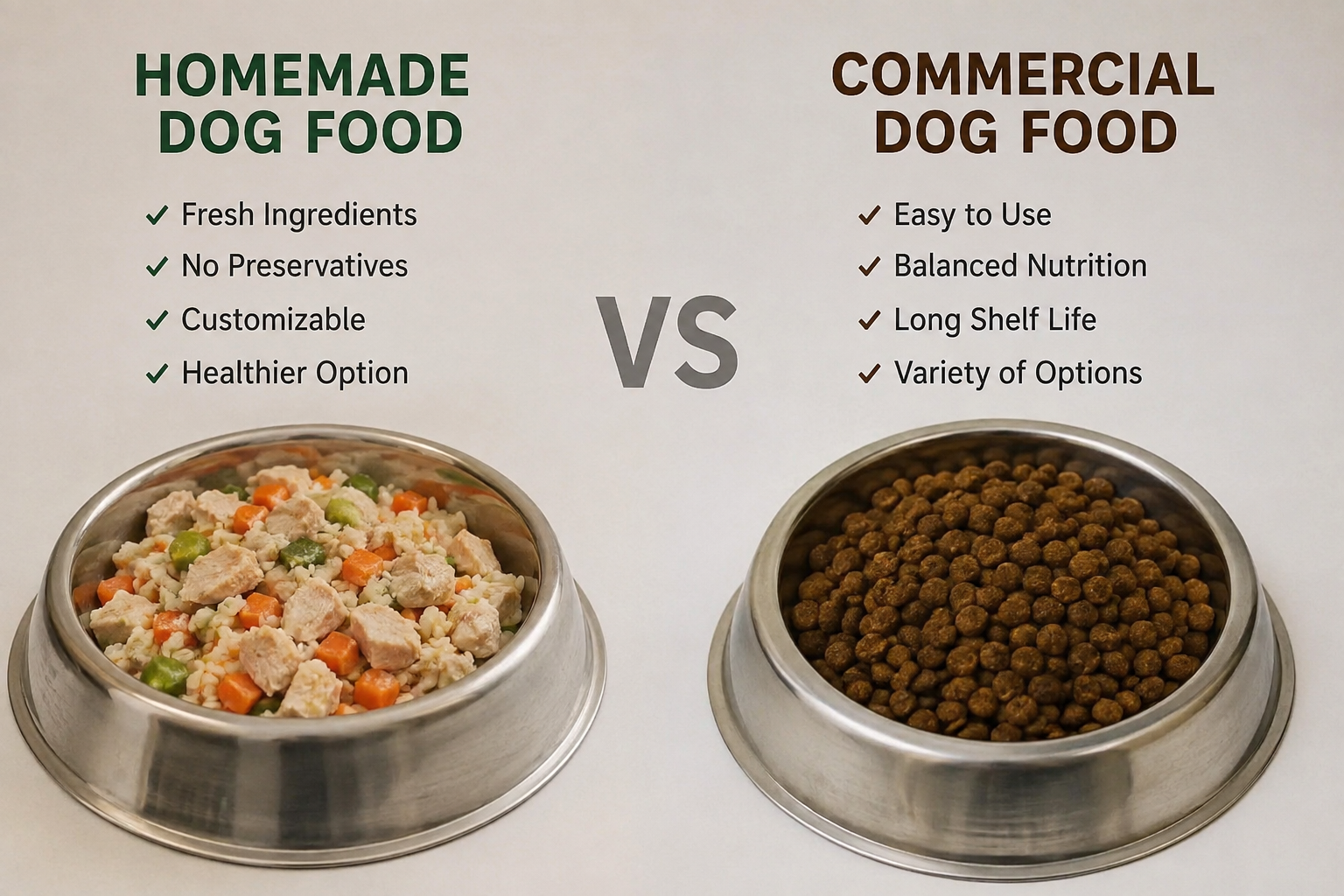
Homemade dog food can be prepared using fresh ingredients and adjusted according to a dog’s individual needs. For example, an owner may prepare meals with chicken, brown rice, carrots, green beans, and other suitable ingredients. However, simply using healthy foods does not always mean the meal is nutritionally complete.
Dogs need the right balance of protein, fats, carbohydrates, vitamins, minerals, and other nutrients. If homemade meals are not properly planned, nutritional deficiencies can develop over time.
Benefits of Homemade Dog Food
One major advantage of homemade dog food is ingredient control. You know exactly what ingredients are going into your dog’s bowl. This can be helpful for owners who want to avoid certain ingredients or monitor their dog’s diet closely.
Homemade meals can also be useful for dogs with specific dietary requirements. A veterinarian may recommend a special diet for a dog with certain health or nutritional needs. In such situations, carefully prepared homemade food may become part of a feeding plan.
Another benefit is freshness. Homemade dog food is generally prepared from fresh ingredients, which can make meals appealing to some dogs. Owners can also change recipes according to their dog’s preferences while keeping the overall diet balanced.
Preparing food at home can also make owners more aware of portion sizes and ingredients. This can encourage better attention to the dog’s overall nutrition.
Disadvantages of Homemade Dog Food
The biggest problem with homemade dog food is nutritional balance. Dogs need specific amounts of nutrients, and it can be difficult to provide everything they need through ordinary household ingredients.
For example, feeding only meat and rice may provide protein and carbohydrates, but it may not provide enough calcium, certain vitamins, essential fatty acids, or other important nutrients. A diet that looks healthy can still be incomplete.
Another disadvantage is the time required. Preparing homemade dog food regularly requires shopping, cooking, measuring ingredients, storing meals, and cleaning. For busy pet owners, this can become difficult.
There is also a risk of using ingredients that are unsafe for dogs. Foods such as onions, garlic, grapes, raisins, chocolate, and certain other human foods can be dangerous for dogs. Owners must understand canine nutrition and food safety before preparing regular homemade meals.
For these reasons, anyone considering a long term homemade dog food diet should discuss the plan with a veterinarian or a qualified veterinary nutrition professional.
What Is Commercial Dog Food?
Commercial dog food is manufactured specifically for dogs and is available in different forms, including dry food, wet food, and other specialized products. Commercial diets are designed to provide the nutrients dogs need when fed according to the feeding instructions.
Many commercial dog foods are formulated for different life stages. Puppy food, adult dog food, and senior dog food can have different nutritional profiles because dogs have different requirements as they grow and age.
There are also commercial dog foods designed for specific needs, including weight management and certain dietary sensitivities. Choosing an appropriate product can make feeding your dog simple and convenient.
Benefits of Commercial Dog Food
Convenience is one of the biggest advantages of commercial dog food. It does not require daily cooking, making it easier for busy dog owners to provide regular meals.
A properly formulated commercial dog food can also provide a consistent combination of nutrients. This is particularly important because dogs require more than just protein and carbohydrates. Their diet must provide appropriate amounts of vitamins, minerals, fats, and other essential nutrients.
Commercial dog food is also available in many varieties. Dry dog food is easy to store and measure, while wet dog food can provide additional moisture and may be appealing to dogs that prefer softer meals.
Another advantage is consistency. When the same complete and balanced food is fed regularly, owners can easily monitor how much their dog is eating. This can make portion control easier.
Disadvantages of Commercial Dog Food
Commercial dog food is convenient, but not every product is equally suitable for every dog. The quality and nutritional value can vary between products, so owners should read labels carefully.
Some dogs may also have food sensitivities or preferences that make certain commercial foods unsuitable. A dog may experience digestive problems after eating a particular formula, although digestive problems can have many causes and should not automatically be blamed on the food.
Another concern for some owners is the use of ingredients they do not personally prefer. However, it is important to focus on the nutritional adequacy and safety of the complete diet rather than judging a food only by individual ingredients.
Owners should choose commercial dog food from reputable manufacturers and select a product appropriate for the dog’s life stage and nutritional requirements.
Homemade Dog Food vs Commercial Dog Food
When comparing homemade dog food vs commercial dog food, there is no single answer that works for every dog.
Homemade dog food offers greater control over ingredients and can be customized when appropriate. However, it requires more time and nutritional knowledge. The biggest concern is making sure the diet provides all essential nutrients in the correct amounts.
Commercial dog food offers convenience, consistency, and professionally formulated nutrition when a complete and balanced product is selected. It is usually easier for most owners to feed correctly on a daily basis.
The best option should therefore be based on the individual dog rather than trends or personal opinions.
Which Is Better for Your Dog?
For many healthy dogs, a high quality commercial dog food that is complete and balanced can be a practical and reliable choice. It provides convenience while helping owners meet their dog’s daily nutritional needs.
Homemade dog food can also be appropriate when it is carefully formulated and prepared. If you want to feed homemade meals regularly, it is important to avoid creating recipes based only on personal preference. A veterinary nutrition professional can help create a balanced feeding plan based on your dog’s individual needs.
Some owners also combine commercial food with carefully selected homemade additions. However, treats and extra foods should remain a reasonable part of the overall diet so that they do not unbalance the dog’s nutrition or contribute excessive calories.
Important Nutrients in a Dog’s Diet
Whether you choose homemade dog food or commercial dog food, nutrition should always be the main priority. Dogs need protein to support muscles and body tissues. Healthy fats provide energy and support skin and coat health. Carbohydrates can provide energy and dietary fiber when appropriate.
Dogs also need vitamins and minerals for normal body functions, strong bones, immune support, and overall health. Water is equally important and should always be available.
The correct amount of each nutrient depends on factors such as age, size, activity level, and health condition. Puppies, adult dogs, senior dogs, pregnant dogs, and highly active dogs may have different nutritional needs.
How to Choose the Right Dog Food
Start by considering your dog’s life stage. Puppies need food that supports growth, while adult dogs need nutrition for maintenance. Senior dogs may have different calorie and nutrient requirements.
Next, consider your dog’s activity level. An active dog may need more energy than a dog that spends most of the day resting.
You should also consider body condition. Overfeeding can lead to unhealthy weight gain, while insufficient nutrition can cause poor body condition and other problems.
When choosing commercial dog food, look for a product that is appropriate for your dog’s life stage and identified as complete and balanced according to the relevant nutritional standards for the market where you live.
If choosing homemade dog food, work with a veterinarian or veterinary nutrition professional to create a properly balanced recipe.
Final Thoughts
The debate between homemade dog food vs commercial dog food is not really about finding one option that is perfect for every dog. Both can have a place in responsible pet care when nutrition, safety, portion size, and individual needs are considered.
Homemade dog food provides control over ingredients and can be customized, but it requires careful planning to avoid nutritional deficiencies. Commercial dog food provides convenience and consistency and can offer complete nutrition when a suitable product is selected.
Your dog’s health should always come before trends or personal preferences. Before making major changes to your dog’s diet, speak with a veterinarian, especially if your dog is a puppy, senior, pregnant, underweight, overweight, or has special dietary needs.
A balanced diet, proper portions, fresh water, regular exercise, and routine veterinary care all work together to support a long and healthy life for your dog.