Many cat owners like the idea of preparing food at home. Homemade cat food can seem like a simple way to know exactly what goes into a cat’s bowl. Fresh meat, carefully selected ingredients, and a familiar cooking routine can also make feeding feel more personal.
However, cats have very specific nutritional needs. A homemade diet should not be created simply by mixing meat, rice, vegetables, or other ingredients. Cats are obligate carnivores, which means their bodies depend on nutrients naturally found in animal tissues. They also need certain vitamins, minerals, amino acids, and fatty acids in the correct amounts.
For this reason, responsible homemade cat food requires careful planning. The goal is not just to prepare food that a cat enjoys. The goal is to provide complete and balanced nutrition while keeping food safe and suitable for the cat’s age, health, activity level, and lifestyle.
This guide explains the basics of homemade cat food, what cats need nutritionally, common mistakes to avoid, food safety considerations, and how owners can approach homemade feeding responsibly.
What Is Homemade Cat Food?
Homemade cat food is food prepared at home specifically for a cat instead of relying entirely on commercially prepared cat food. Recipes may include cooked animal protein, selected sources of fat, and carefully measured supplements.
Some owners prepare homemade meals occasionally as treats or additions to a normal diet. Others want to feed homemade food as the main diet.
These two situations are very different.
A small amount of plain cooked meat may be used as an occasional treat for many healthy cats. However, a diet that replaces the cat’s normal complete food needs much more careful planning.
A cat can appear healthy while developing a nutritional deficiency slowly. Some problems may not become obvious until the deficiency has been present for a long time.
That is why homemade cat food should be approached as a nutritional project rather than simply a cooking project.
Why Do Some Owners Choose Homemade Cat Food?
There are several reasons why people become interested in homemade cat food.
Some owners want greater control over ingredients. They may prefer to know what meat and other ingredients their cat is eating.
Others may have a cat with particular dietary needs. In some cases, a veterinarian may recommend a specially formulated homemade diet as part of a medical nutrition plan.
Some owners also enjoy preparing fresh meals for their pets.
Another reason is concern about highly processed foods. However, processing itself does not automatically make a cat food unhealthy. Commercial cat foods can be carefully formulated to provide the nutrients cats require.
The important question is whether the final diet is nutritionally complete and appropriate for the individual cat.
Understanding a Cat’s Nutritional Needs
Before preparing homemade cat food, it is important to understand what cats actually need.
Cats require protein, fat, essential amino acids, vitamins, minerals, water, and other nutrients.
Protein is particularly important because cats have a naturally high requirement for protein compared with many other animals.
Animal based proteins can provide amino acids that cats need for normal body function.
One particularly important amino acid is taurine. Cats cannot produce enough taurine on their own, so it must come from their diet.
Cats also require arachidonic acid and preformed vitamin A because their bodies cannot obtain these nutrients from plant sources in the same way that some other animals can.
This is one reason why simply making a meal from meat and vegetables is not enough.
Protein in Homemade Cat Food
Protein is one of the most important parts of a cat’s diet.
Common animal protein sources include chicken, turkey, beef, rabbit, and certain types of fish. Different meats provide different nutrient profiles, so changing ingredients without understanding their nutritional differences can affect the overall balance of a recipe.
Cooked meat can provide valuable protein, but muscle meat alone does not provide every nutrient a cat needs.
For example, feeding only chicken breast for an extended period would not create a complete diet.
The type of meat, amount of fat, preparation method, and required supplements all matter.
Why Taurine Matters
Taurine deserves special attention when discussing homemade cat food.
Cats require taurine for several important functions, including normal heart function, vision, reproduction, and other biological processes.
A deficiency can cause serious health problems.
Although animal tissues naturally contain taurine, cooking and food preparation can affect nutrient availability. The amount present can also vary between ingredients.
For this reason, owners who want to feed a homemade diet regularly should use a professionally formulated recipe that accounts for taurine requirements.
Adding random supplements without knowing the correct amount is not a safe solution. Too little may fail to meet nutritional needs, while unnecessary supplementation can also create problems.
Cats Need More Than Meat
One of the most common misunderstandings about homemade cat food is the belief that cats only need meat.
Meat is extremely important, but a complete feline diet requires much more.
Cats need calcium and phosphorus in an appropriate balance. They also need vitamins and trace minerals.
Bones can contain calcium, but giving cats cooked bones is dangerous because cooked bones can become brittle and splinter.
Raw bones also carry safety concerns and should not be used casually as a calcium source.
A properly formulated homemade diet usually requires a carefully measured source of essential nutrients.
The Importance of Calcium
Calcium plays an important role in bones, teeth, muscles, and other body functions.
A diet containing large amounts of boneless meat without an appropriate calcium source can become nutritionally unbalanced.
This is particularly important for kittens because their growing bodies have high nutritional demands.
Owners should never assume that adding a little dairy product will solve the problem. Many adult cats have limited ability to digest lactose, and dairy products are not a reliable way to balance a homemade feline diet.
What About Vegetables?
Cats do not require vegetables in the same way humans do.
Some homemade cat food recipes include small amounts of vegetables or other plant ingredients. These may contribute fiber or other nutrients, but they should not replace the animal based nutrients cats require.
A cat is not a small human. Human dietary ideas should not automatically be transferred to feline nutrition.
Large amounts of vegetables, grains, or other plant ingredients can also reduce the nutritional concentration of a diet.
The foundation of a homemade cat diet should be based on feline nutritional requirements rather than human food preferences.
Cooked Homemade Cat Food
Cooked homemade cat food is often considered easier to handle from a food safety perspective than raw diets.
Cooking can reduce many harmful microorganisms that may be present in raw meat.
If you prepare cooked cat food, meat should be handled carefully and cooked appropriately. Avoid seasoning the food with ingredients that are unsafe for cats.
Onions and garlic, for example, should not be included in cat food.
Salt, sauces, spicy seasonings, and rich human foods are also unnecessary.
The safest approach is to follow a recipe specifically designed for cats rather than modifying a human recipe.
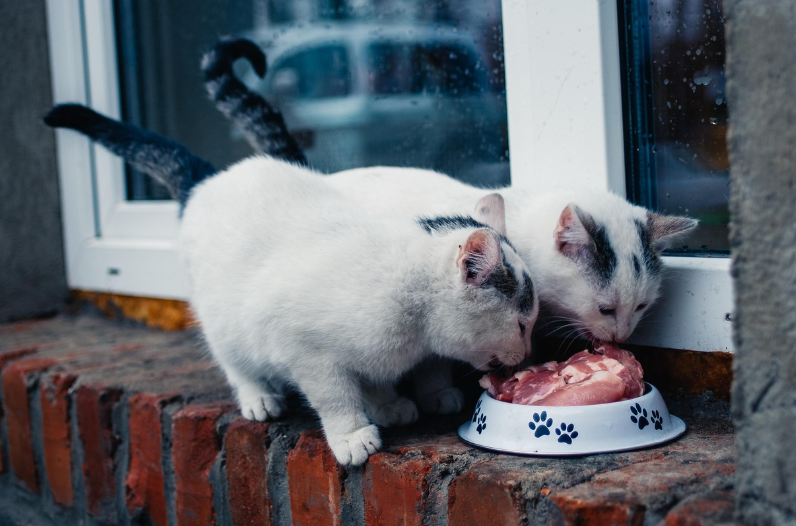
Raw Homemade Cat Food
Some cat owners choose raw feeding because they believe it is closer to what cats would eat naturally.
However, raw diets come with food safety concerns. Raw meat can carry bacteria and parasites that may affect cats and people.
There is also a nutritional concern. A raw diet can still be incomplete if it does not contain the correct amounts of essential nutrients.
Raw feeding therefore should not be treated as automatically healthier simply because the food is less processed.
Anyone considering a raw homemade diet should discuss the plan with a veterinarian, particularly if children, elderly people, pregnant people, or individuals with weakened immune systems live in the household.
Ingredients to Avoid
Responsible cat owners should know which common foods can be harmful.
Onions and garlic should not be included in homemade cat food.
Chocolate is also unsafe for cats.
Alcohol should never be given to a cat.
Caffeinated drinks and products should be avoided.
Grapes and raisins are also inappropriate for cats.
Seasoned human foods can contain excessive salt, spices, fats, or ingredients that are unsafe for animals.
It is better to prepare cat food without unnecessary flavoring.
Cats do not need food to taste the way human meals taste.
Can Cats Eat Chicken?
Plain cooked chicken can be a useful source of animal protein for cats.
However, chicken by itself is not a complete homemade diet.
A cat that eats only chicken for an extended period can develop nutritional deficiencies.
If chicken is used in a homemade recipe, it should be part of a properly balanced formula rather than the entire diet.
Remove cooked bones before feeding. Avoid fried chicken, heavily seasoned chicken, processed chicken products, and chicken containing sauces.
Can Cats Eat Fish?
Fish can provide protein and certain fatty acids, but it should not automatically become the main ingredient in a homemade cat diet.
Some fish products may contain excessive levels of certain nutrients or contaminants depending on the species and feeding pattern.
Canned fish intended for humans may also contain salt or other ingredients that are unsuitable as a regular cat food.
Fish can sometimes be included in a properly formulated diet, but variety and nutritional balance are important.
Homemade Cat Food for Kittens
Kittens have different nutritional needs from adult cats.
They are growing rapidly and require appropriate amounts of energy, protein, calcium, phosphorus, and other nutrients.
A homemade diet that is acceptable for an adult cat may not be suitable for a growing kitten.
This is why homemade kitten food should be developed with professional nutritional guidance.
Kittens should not be placed on an improvised homemade diet simply because the ingredients appear healthy.
Growth is a sensitive period, and nutritional mistakes can have lasting consequences.
Homemade Food for Senior Cats
Older cats may also have different nutritional needs.
Some senior cats remain healthy with a standard complete diet, while others develop medical conditions that require dietary changes.
Kidney disease, dental problems, obesity, digestive issues, and other conditions can influence food choices.
A homemade diet for a senior cat should therefore consider the individual animal rather than simply following a general recipe found online.
Portion Control Matters
Even a nutritionally balanced homemade diet can cause problems if the portions are too large.
Cats have relatively small bodies, so excess calories can accumulate quickly.
Overweight cats may face increased health risks, while cats that receive too little food may lose muscle and body condition.
Portion size should be based on factors such as body weight, age, activity level, reproductive status, and health.
A veterinarian can help determine whether a cat is maintaining an appropriate body condition.
Changing From Commercial Food to Homemade Food
Cats can be creatures of habit. A sudden change in food may cause digestive upset or make the cat refuse the new diet.
If a veterinarian has approved the dietary change, transition gradually when appropriate.
You can introduce the new food in small amounts while monitoring appetite, stool quality, energy, and body weight.
If a cat stops eating, the situation should be taken seriously. Cats can develop serious health problems when they go without adequate food for too long.
Never assume that a cat will eventually eat a homemade recipe simply because it is hungry.
Food Safety in the Kitchen
Food safety is extremely important when preparing homemade cat food.
Wash your hands before and after handling raw meat.
Use clean cutting boards, knives, bowls, and preparation surfaces.
Keep raw meat away from foods intended for people.
Store prepared food promptly in the refrigerator.
Do not leave perishable homemade cat food sitting at room temperature for long periods.
Small portions can be stored separately so that only the amount needed for one meal is removed.
Good kitchen hygiene protects both the cat and the people living in the home.
Storage of Homemade Cat Food
Proper storage helps reduce spoilage.
Fresh homemade cat food should be refrigerated promptly after preparation.
For longer storage, some properly prepared recipes can be divided into meal sized portions and frozen.
Use clean, sealed containers and label them with the preparation date.
When serving frozen food, thaw it safely in the refrigerator rather than leaving it out on the kitchen counter for an extended period.
Always check food before serving. If the smell, appearance, or texture seems unusual, it is safer to discard it.
Why Online Recipes Need Careful Attention
The internet contains thousands of homemade cat food recipes, but they are not all nutritionally complete.
A recipe may look healthy because it contains quality meat and fresh ingredients. That does not mean it provides all essential nutrients.
Recipes can also vary significantly in ingredient amounts and supplement requirements.
One recipe may be designed for occasional feeding, while another may be intended as a complete diet.
Responsible pet owners should therefore look for recipes developed by qualified veterinary nutrition professionals or use commercial nutritional formulations designed specifically for homemade feline diets.
Should Supplements Be Added?
Supplements can be important in a properly designed homemade diet.
However, supplements should not be selected randomly.
Adding several vitamins and minerals without understanding their interactions can create nutritional imbalances.
For example, some vitamins are stored in the body, meaning excessive intake can potentially become harmful.
A complete homemade recipe should specify the required supplements and quantities.
Following the recipe accurately is important. Changing ingredient amounts or leaving out supplements can change the nutritional balance.
Signs That a Cat May Need Dietary Attention
Owners should monitor their cats regularly.
Changes in appetite, weight, stool, vomiting, energy, coat condition, thirst, or urination can sometimes indicate an underlying problem.
A homemade diet should not be used as a substitute for veterinary care.
If a cat develops persistent digestive problems, loses weight unexpectedly, becomes unusually tired, or refuses food, contact a veterinarian.
Regular veterinary checkups are especially valuable for cats eating specialized homemade diets.
Homemade Cat Food Does Not Have to Be Complicated
Responsible homemade feeding does not mean preparing elaborate meals every day.
The most important part is nutritional accuracy.
A simple recipe that is complete and balanced is more useful than a complicated meal containing many ingredients but missing essential nutrients.
Owners should focus on the cat’s nutritional requirements rather than trying to create restaurant style meals.
Cats care much less about presentation than humans do.
A simple, safe, nutritionally balanced meal is the real goal.
Common Mistakes to Avoid
Several mistakes appear frequently when owners begin preparing homemade cat food.
The first is feeding only muscle meat.
The second is using a recipe designed for humans.
The third is adding supplements without knowing the required amounts.
Another mistake is changing recipes frequently without recalculating nutritional content.
Some owners also assume that natural ingredients automatically provide complete nutrition.
Another problem is ignoring calorie intake.
Finally, some owners continue a homemade diet without monitoring their cat’s weight and health.
Avoiding these mistakes can make homemade feeding much safer.
When Commercial Cat Food May Be the Better Choice
Homemade cat food is not the only responsible feeding option.
Complete commercial cat foods are formulated to meet established nutritional requirements when fed as directed.
For many owners, a complete commercial diet is easier to manage consistently.
Some owners may combine commercial food with small amounts of homemade food or plain cooked meat. Treats and additions should still remain appropriate for the cat’s overall calorie intake.
The best feeding approach depends on the individual cat and the owner’s ability to provide consistent, nutritionally complete meals.
A Responsible Approach to Homemade Cat Food
If you want to prepare homemade cat food regularly, start with education rather than ingredients.
Learn about feline nutritional requirements.
Discuss your plan with a veterinarian.
If possible, work with a veterinary nutrition professional for a diet intended to be fed as the main source of nutrition.
Use accurate measurements.
Follow the recipe consistently.
Store food safely.
Monitor your cat’s weight and overall health.
These simple principles can make a major difference.
Final Thoughts
Homemade cat food can be a meaningful option for some pet owners, but it requires more knowledge than simply cooking meat at home.
Cats have specialized nutritional requirements. Protein, taurine, calcium, essential fatty acids, vitamins, minerals, and other nutrients must be provided in appropriate amounts.
A diet made from fresh ingredients can still be incomplete if important nutrients are missing.
The most responsible approach is to treat homemade cat food as a carefully planned nutritional diet. Use recipes developed specifically for cats, measure ingredients accurately, follow food safety practices, and seek professional guidance when homemade food will make up most or all of the diet.
For healthy adult cats, kittens, senior cats, and cats with medical conditions, nutritional needs can differ. A veterinarian can help determine whether a particular homemade feeding plan is appropriate.
Ultimately, responsible pet ownership is not about whether food is homemade or commercially prepared. It is about making sure the cat receives safe, complete, balanced, and appropriate nutrition every day.
When homemade cat food is prepared with proper knowledge and professional guidance, owners can make informed feeding choices while keeping their cat’s health at the center of the decision.