Knowing how much food you should give your dog every day is one of the most important parts of responsible pet care. Every dog is different, so there is no single amount of food that works for every pet. A small puppy has different nutritional needs than an adult dog, while an active working dog may need more calories than an older dog that spends most of the day resting.
Giving your dog the right amount of food can help maintain a healthy weight, support strong muscles, improve energy levels, and reduce the risk of obesity. On the other hand, feeding too much can lead to weight gain and other health problems. Feeding too little can cause poor growth, weakness, and nutritional deficiencies.
How Much Food Does a Dog Need Every Day?
The amount of food your dog needs depends on several factors. These include age, size, breed, activity level, body condition, health, and the type of food you are feeding. Most commercial dog food packages provide a feeding guide based on your dog’s weight. This guide is a useful starting point, but it should not be treated as an exact rule.
For example, a small adult dog may need much less food than a large breed dog. A highly active dog that runs or exercises every day may require more calories than a dog that mainly stays indoors.
The best approach is to start with the recommended serving size on the dog food package and then watch your dog’s body condition. If your dog starts gaining too much weight, the daily amount may need to be reduced. If your dog is losing weight without a reason, you may need to increase the amount or speak with a veterinarian.
Factors That Affect Daily Dog Food Amount
Several factors determine how much food your dog should receive each day.
Age
Age is one of the most important factors. Puppies are growing quickly and usually need more calories and nutrients compared with adult dogs. Puppy food is often more calorie rich and contains nutrients that support healthy growth.
Adult dogs generally need a balanced amount of food that maintains their body weight and energy. Senior dogs may become less active as they age, so their calorie requirements can decrease. However, some older dogs may have special nutritional needs depending on their health.
Dog Size
A dog’s size also affects daily food requirements. Small dogs generally need fewer total calories, while large dogs require more food. However, larger dogs do not always need proportionally more food because calorie needs also depend on metabolism and activity.
Always check the feeding recommendations for your dog’s current weight instead of guessing based only on breed size.
Activity Level
Activity has a major effect on how many calories a dog needs. An active dog that spends a lot of time walking, playing, running, or training may need more food than a less active dog.
If your dog exercises regularly, monitor its weight and body shape. You may need to adjust the daily serving according to changes in activity.
Body Weight and Condition
Your dog’s current weight is another important consideration. A healthy weight allows your dog to move comfortably and maintain good overall health.
Do not focus only on the number shown on a weighing scale. Look at your dog’s body condition too. You should be able to feel the ribs without seeing them clearly in most healthy dogs. Your dog should also have a visible waist when viewed from above.
If you cannot easily feel your dog’s ribs because of excess body fat, your dog may be overweight. If the ribs, spine, or hip bones are very prominent, your dog may be underweight.
How to Read a Dog Food Feeding Guide
Dog food labels usually provide recommended daily amounts based on body weight. For example, the package may give a range of food for dogs weighing between certain amounts.
These recommendations are usually intended as a general guide. Two dogs with the same weight may still need different amounts because of differences in activity, metabolism, age, and health.
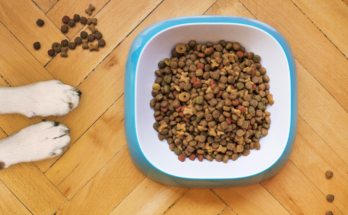
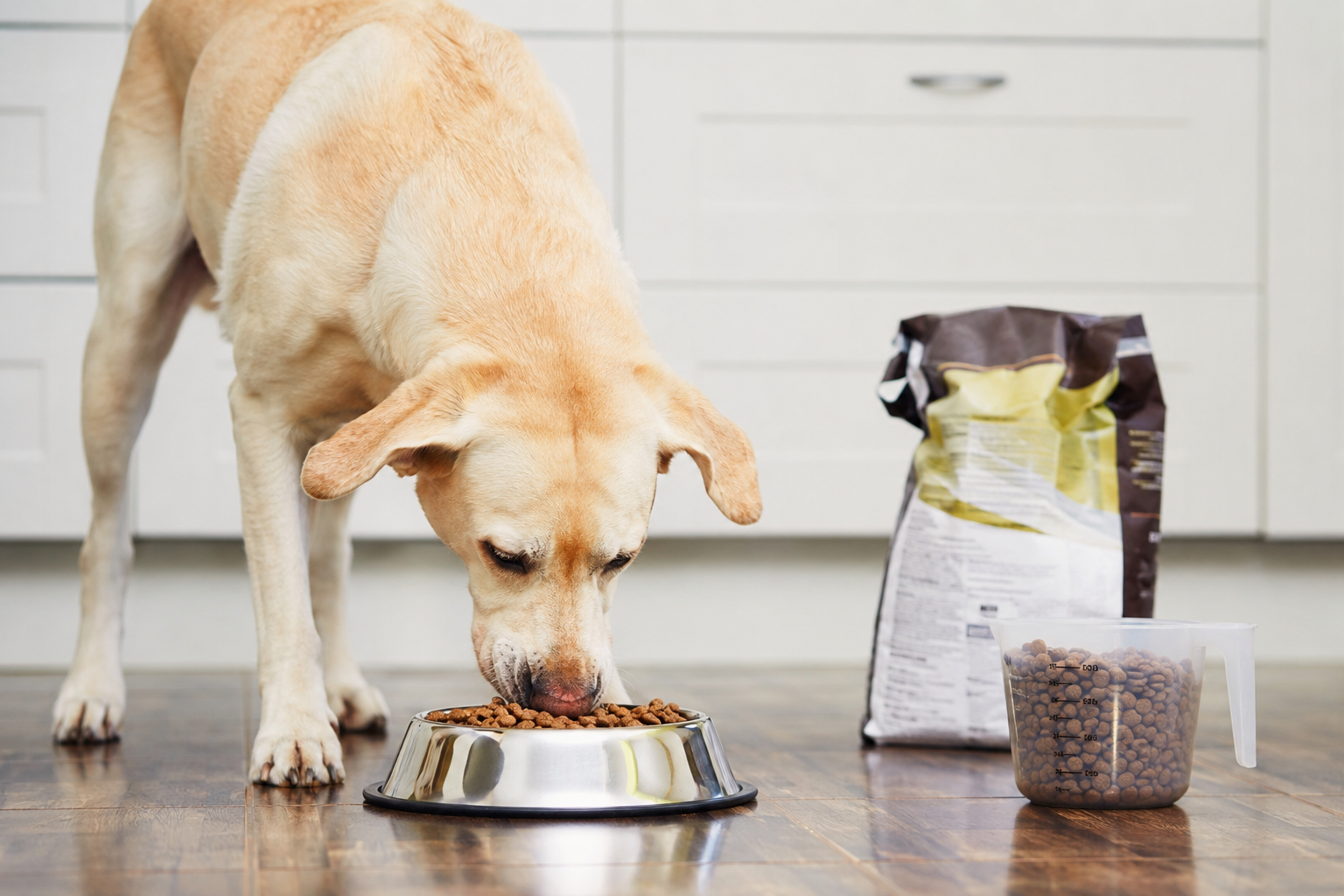
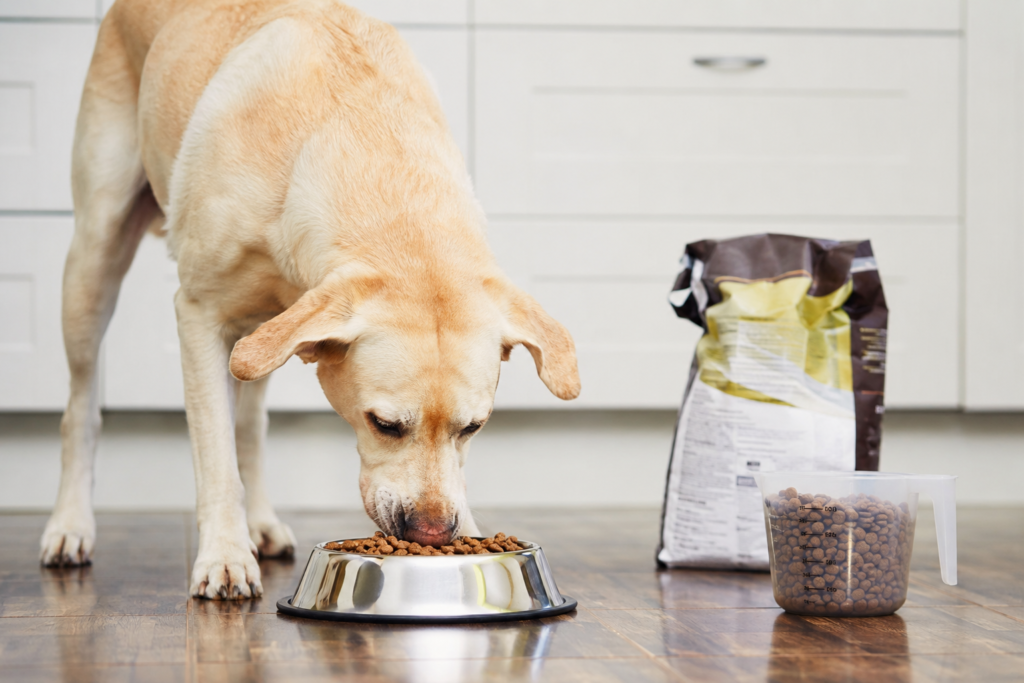
It is important to measure your dog’s food instead of simply filling the bowl without checking the amount. Using a measuring cup can help maintain consistency. For even greater accuracy, a kitchen scale can be used to measure food by weight.
How Many Times Should You Feed Your Dog?
The daily amount of food should usually be divided into regular meals rather than giving the entire amount at once.
Many adult dogs do well with two meals per day. Feeding once in the morning and once in the evening can make it easier to control portions and maintain a consistent routine.
Puppies often need more frequent meals because their stomachs are smaller and they are growing rapidly. The exact feeding schedule depends on the puppy’s age, size, and nutritional needs.
Senior dogs may also benefit from a consistent feeding schedule. If your dog has a medical condition, your veterinarian may recommend a specific meal routine.
How Much Food Should a Puppy Eat?
Puppies require careful feeding because they are still developing. They need enough calories, protein, vitamins, and minerals to support healthy growth.
The amount of puppy food depends on the puppy’s age, current weight, expected adult size, and the type of food. Large breed puppies have different nutritional requirements from small breed puppies.
It is important not to overfeed a puppy simply because it appears hungry. Rapid weight gain can create problems, especially in growing large breed dogs. Follow the puppy food feeding instructions and discuss portions with your veterinarian when necessary.
How Much Food Should an Adult Dog Eat?
Adult dogs usually need enough food to maintain a healthy body weight and support normal daily activities.
An adult dog’s daily food requirement can vary greatly. A small inactive dog may need a relatively small portion, while a large active dog may require significantly more calories.
The best way to determine the right amount is to begin with the feeding guide, divide the daily amount into meals, and monitor your dog’s weight and body condition regularly.
Treats Count as Food Too
One common mistake dog owners make is forgetting that treats contain calories. If your dog receives several treats during the day, those calories should be considered as part of its total daily food intake.
Treats should be given in moderation. You can also use small pieces of healthy dog friendly foods as occasional rewards, depending on your dog’s dietary needs.
Avoid giving large amounts of table food because some human foods can be unhealthy or dangerous for dogs. Foods containing chocolate, grapes, raisins, onions, garlic, and certain artificial sweeteners can be harmful to dogs.
Signs That Your Dog May Be Eating Too Much
Weight gain is one of the clearest signs that a dog may be receiving too many calories. Other signs can include difficulty feeling the ribs, a less visible waist, reduced activity, and getting tired more quickly.
Overfeeding can contribute to obesity, which may place extra stress on the joints and make movement more difficult. Maintaining a healthy weight is therefore an important part of long term dog care.
If your dog is gaining weight, do not make a drastic food reduction without considering its nutritional needs. Gradually adjust portions and seek professional advice if you are unsure.
Signs That Your Dog May Not Be Eating Enough
Weight loss, low energy, weakness, poor coat condition, or constant hunger may indicate that your dog is not receiving enough food. However, these signs can also be related to health problems.
If your dog suddenly loses weight or refuses food, do not assume that the problem is simply the amount of food being offered. A veterinarian can help determine the underlying cause.
Choosing the Right Dog Food
The amount of food matters, but the quality and nutritional balance of the food are also important. Choose a dog food that is appropriate for your dog’s age, size, activity level, and specific nutritional needs.
A balanced diet should provide the nutrients your dog needs for normal health. Different dogs may benefit from different formulas, so avoid changing food frequently without a reason.
When changing your dog’s food, make the transition gradually. Mixing increasing amounts of the new food with the old food over several days can help your dog adjust.
Monitor Your Dog Regularly
Your dog’s food requirements can change throughout life. A dog may need more calories during periods of increased activity and fewer calories after becoming less active.
Check your dog’s weight regularly and pay attention to changes in body shape, energy, appetite, and overall behavior. Keeping a simple record of food portions and weight can make it easier to notice changes.
If your dog is pregnant, nursing, recovering from illness, or dealing with a health condition, nutritional needs may be different. In these situations, professional veterinary guidance is especially useful.
Final Thoughts
How much food you should give your dog every day depends on more than just the size of your dog’s bowl. Age, weight, activity level, breed, health, and food type all play an important role in determining the correct portion.
Start with the feeding instructions provided by the dog food manufacturer, measure portions carefully, and monitor your dog’s body condition. Remember to include treats and other foods in the total daily calorie intake.
There is no perfect feeding amount that works for every dog. The right amount is the amount that helps your dog maintain a healthy weight, good energy, and overall well being. By paying attention to your dog’s changing needs and adjusting food portions when necessary, you can provide a healthy and balanced diet throughout your dog’s life.