Choosing the right food for your pet is one of the most important decisions you can make as a responsible pet owner. Many pet owners look at the brand name, attractive packaging, or words such as natural and healthy when buying pet food. However, the most useful information is often found on the pet food label. Learning how to read pet food labels correctly can help you understand what your dog or cat is actually eating and whether the food is suitable for their nutritional needs.
Pet food labels contain important details about ingredients, nutrients, feeding instructions, calories, and the type of animal the food is designed for. Once you understand these details, choosing healthy pet food becomes much easier. This guide explains how to read pet food labels correctly and what information you should pay attention to before purchasing a product.
Start With the Product Name
The product name can provide useful information about the food, but it should not be the only thing you consider. Words used in the product name may describe an ingredient or the main type of food.
For example, a package may say chicken food, beef dinner, or fish recipe. These names can give you an idea about the main ingredients, but the ingredient list provides much more detailed information.
Do not assume that a food is automatically better simply because a certain meat is shown in large letters on the front of the package. Always turn the package around and read the complete label.
Check the Intended Animal
The first thing you should confirm is whether the food is made for your particular pet. Dog food is designed for dogs, while cat food is formulated for cats. Their nutritional requirements are different.
You should also check whether the product is intended for puppies, kittens, adult pets, senior pets, or pets with specific nutritional needs. A growing puppy or kitten may require different amounts of protein, fat, vitamins, and minerals than an adult animal.
Choosing food designed for your pet’s age and life stage is an important part of providing balanced pet nutrition.
Read the Ingredient List Carefully
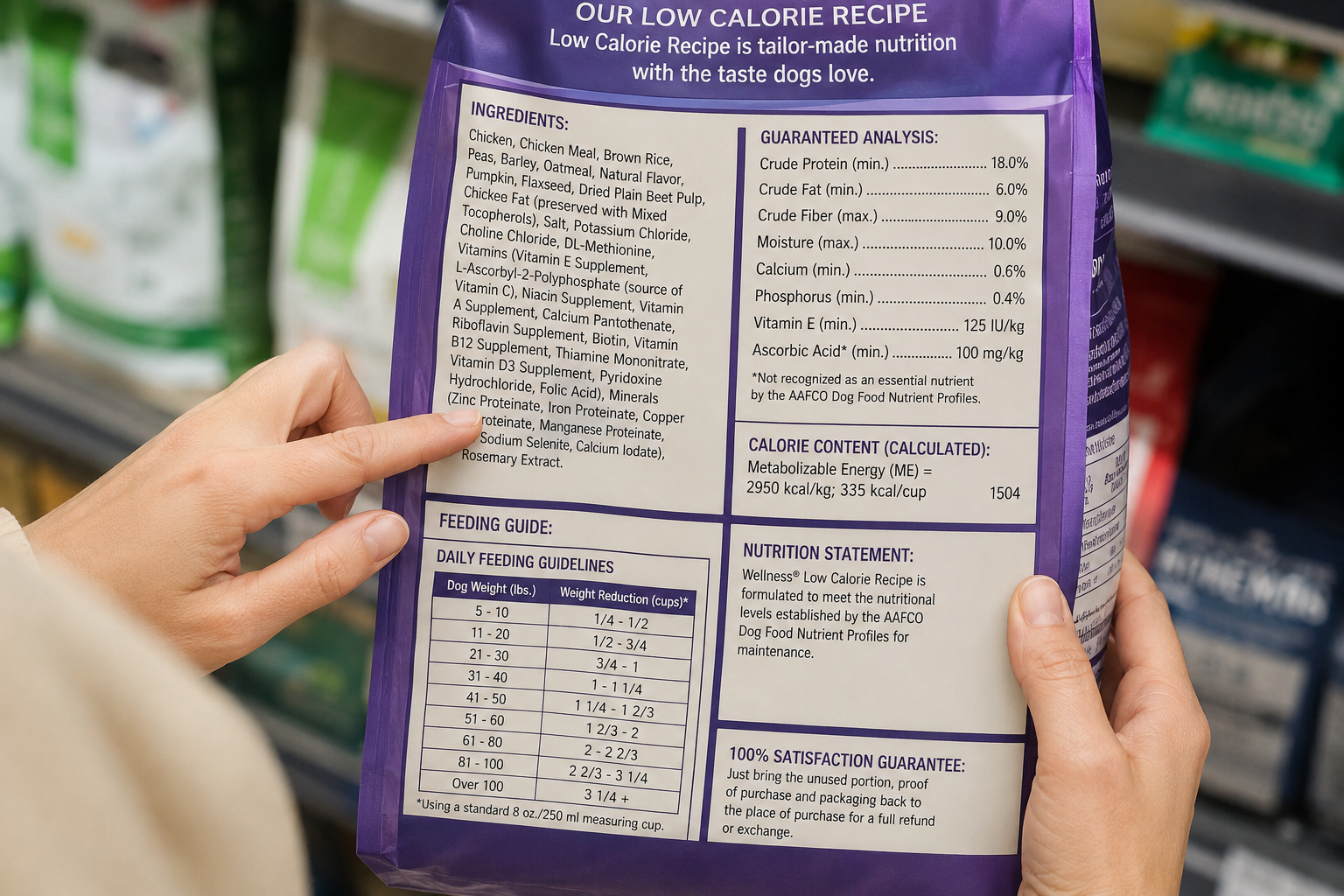
The ingredient list is one of the most important parts of a pet food label. Ingredients are generally listed by weight, with ingredients appearing in larger amounts listed before those present in smaller amounts.
When reading the ingredients, look for recognizable sources of protein such as chicken, turkey, beef, fish, lamb, or eggs. Depending on your pet’s nutritional needs, other ingredients such as grains, vegetables, fruits, and specific sources of fat may also be included.
It is important to remember that an ingredient list alone does not tell you whether a food is nutritionally complete. A food can contain several ingredients that sound healthy but still fail to provide the right balance of nutrients.
Understand Protein Sources
Protein is an important part of a healthy pet diet. Dogs need protein to support muscles, tissues, and normal body functions. Cats have particularly high protein requirements because they are obligate carnivores.
When reading a pet food label, identify the major protein sources. Meat, poultry, fish, eggs, and certain animal based ingredients can provide valuable protein.
However, you should not judge food quality only by the percentage of protein printed on the package. The quality and digestibility of protein sources also matter. Your pet’s age, size, activity level, and health needs should all be considered when choosing a food.
Look at the Guaranteed Analysis
The guaranteed analysis provides information about certain nutrients in the food. It commonly includes crude protein, crude fat, crude fiber, and moisture.
This section allows pet owners to compare different foods, but the numbers can sometimes be difficult to understand. Moisture affects the percentage of nutrients, especially when comparing dry food with wet food.
For example, wet pet food usually contains much more moisture than dry food. Therefore, simply comparing the protein percentages on two labels may not provide a fair comparison.
The guaranteed analysis is useful, but it should be considered together with the ingredient list, calorie information, feeding instructions, and nutritional adequacy statement.
Check the Nutritional Adequacy Statement
One of the most valuable pieces of information on a pet food label is the nutritional adequacy statement. This statement helps explain whether the food is complete and balanced for a particular life stage.
Look for information indicating that the food is formulated to meet established nutritional requirements for the intended animal and life stage.
A complete and balanced food is generally designed to provide the essential nutrients a pet needs when fed according to the recommended instructions. This is especially important if the food will make up most or all of your pet’s daily diet.
Treats and snacks are different because they are usually not designed to provide complete nutrition.
Pay Attention to Calories
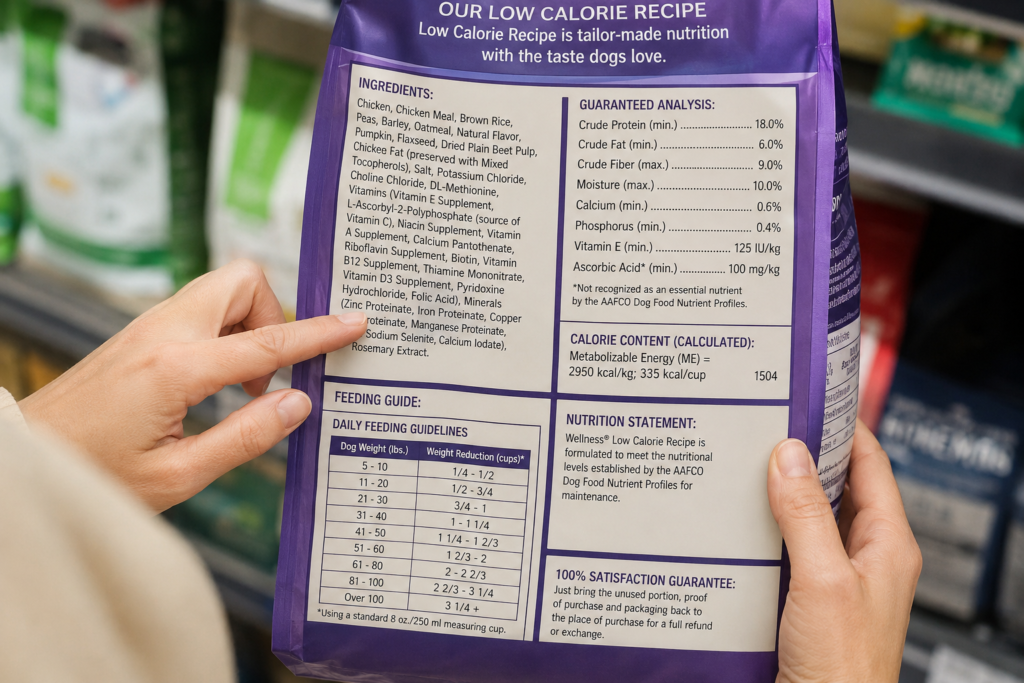
Calories are an important part of pet nutrition that many owners overlook. Feeding too many calories can contribute to excessive weight gain, while feeding too few may result in inadequate energy intake.
Pet food labels may provide calorie information per cup, can, kilogram, or another unit. Use this information along with your veterinarian’s advice and your pet’s individual needs.
A highly active dog may require more energy than a less active dog. Similarly, a young growing pet may have different calorie requirements than an older pet.
Remember that treats also contain calories. If your pet receives several treats each day, those calories should be considered as part of their overall diet.
Understand Feeding Guidelines
The feeding instructions on a pet food label provide a starting point for determining how much food to offer your pet. These recommendations are usually based on body weight and may also consider age or activity level.
However, feeding guidelines are not perfect for every individual animal. Two dogs of the same weight may have different energy requirements because of differences in activity, metabolism, age, and body condition.
Monitor your pet’s weight and body condition regularly. If your pet is gaining or losing weight unexpectedly, the amount of food may need to be adjusted. Your veterinarian can help determine an appropriate feeding plan.
Look at the Type of Fat
Fat is another important nutrient in pet food. It provides energy and helps support healthy skin, a shiny coat, and normal body functions.
When reading a label, look for named fat sources and essential fatty acids. Ingredients such as fish oil and certain animal fats can provide useful fatty acids.
Fat is not automatically unhealthy for pets. The correct amount depends on the animal and their nutritional needs. The key is providing an appropriate balance rather than avoiding fat completely.
Be Careful With Marketing Words
Pet food packaging often uses attractive words such as natural, premium, wholesome, healthy, and gourmet. These terms can influence purchasing decisions, but they do not tell the complete nutritional story.
Instead of relying on marketing language, focus on the information found in the ingredient list, guaranteed analysis, calorie content, feeding guidelines, and nutritional adequacy statement.
The front of the package is designed to attract attention. The nutrition information on the back or side provides much more useful information for making an informed decision.
Check for Added Vitamins and Minerals
Dogs and cats require many vitamins and minerals for normal growth and body function. Commercial pet foods may contain added vitamins and minerals to help create a complete nutritional profile.
Important nutrients can include calcium, phosphorus, iron, zinc, vitamin A, vitamin D, vitamin E, and several B vitamins.
The exact nutritional requirements depend on the animal and life stage. A balanced commercial diet should provide nutrients in appropriate amounts rather than simply containing a long list of vitamins and minerals.
Compare Similar Foods Correctly
If you want to compare two pet foods, do not look at only one number or ingredient. Compare the intended life stage, calorie content, protein and fat levels, ingredient sources, feeding instructions, and nutritional adequacy statement.
It can also be useful to compare foods on a dry matter basis when evaluating nutrient percentages between wet and dry products. This removes the effect of different moisture levels and provides a more meaningful comparison.
For complicated comparisons, especially when your pet has special dietary needs, ask your veterinarian for guidance.
Consider Your Pet’s Individual Needs
Every pet is different. A healthy adult dog may have different dietary needs from a growing puppy. An active working dog may need more energy than a calm household dog. Similarly, cats can have different nutritional requirements depending on their age, lifestyle, and body condition.
If your pet has a medical condition, food allergy, sensitive digestion, or another special nutritional concern, do not choose a therapeutic diet based only on the package. Discuss the appropriate food with a veterinarian.
Common Pet Food Label Mistakes to Avoid
One common mistake is choosing food based only on the first ingredient. Another mistake is believing that a long ingredient list automatically means better nutrition.
Some owners also focus too much on marketing terms or compare protein percentages without considering moisture content. Others ignore calorie information and feeding guidelines.
Another mistake is changing pet food suddenly. If you decide to switch foods, a gradual transition is usually easier on your pet’s digestive system.
Final Thoughts
Learning how to read pet food labels correctly can make a big difference in your pet’s health and nutrition. Instead of judging a product by its packaging or advertising, take time to examine the ingredient list, guaranteed analysis, calorie information, feeding guidelines, and nutritional adequacy statement.
The best pet food is not necessarily the most expensive product or the one with the most impressive words on the package. It is food that provides appropriate and balanced nutrition for your pet’s species, age, size, lifestyle, and individual needs.
By becoming comfortable with pet food labels, you can make smarter choices and provide your dog or cat with a diet that supports healthy growth, strong muscles, good energy levels, healthy skin, and overall wellbeing. When you are unsure about a specific food, especially for a pet with special dietary needs, speaking with a qualified veterinarian can help you make the safest choice.
Keywords: how to read pet food labels, pet food labels, reading pet food labels correctly, healthy pet food, pet nutrition, balanced pet diet, dog food labels, cat food labels, pet food ingredients, pet food nutrition