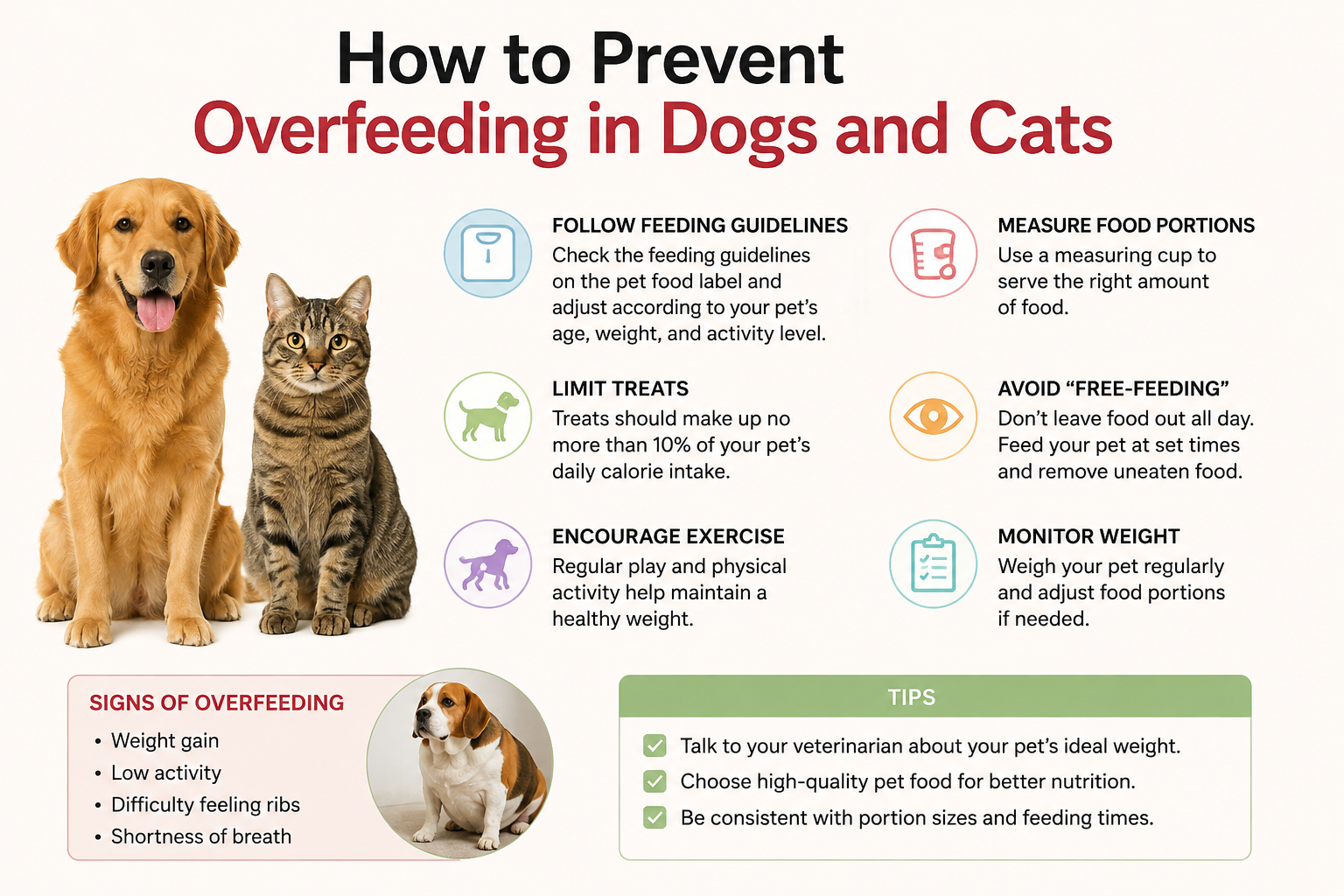
Overfeeding is one of the most common feeding mistakes pet owners make. Many people give their dogs and cats more food than they actually need because they want their pets to feel happy, satisfied, and well cared for. Giving extra food may seem harmless, but regular overfeeding can lead to weight gain, digestive problems, low energy, and other health concerns. Learning how to prevent overfeeding in dogs and cats is an important part of responsible pet care.
A healthy feeding routine should provide the right amount of food according to a pet’s age, size, activity level, and individual needs. Whether you have a playful puppy, an adult dog, a growing kitten, or a senior cat, understanding proper portion control can help your pet maintain a healthy weight and enjoy a better quality of life.
Understand How Much Food Your Pet Needs
The first step to prevent overfeeding in dogs and cats is understanding how much food your pet needs each day. Every pet is different, so there is no single feeding amount that works for every animal.
Pet food packages usually provide feeding recommendations based on weight and age. These recommendations can be useful as a starting point, but they may not always match your pet’s exact needs. A very active dog may require more calories than a less active dog of the same size. Similarly, an indoor cat that spends most of the day sleeping may need less food than an active outdoor cat.
Pay attention to your pet’s body condition, energy level, and weight. If you are unsure about the correct amount, talk with a veterinarian about a suitable daily feeding plan.
Measure Pet Food Instead of Guessing
One of the easiest ways to prevent overfeeding is to measure every meal. Many owners simply fill a bowl without measuring the food. This can gradually lead to excessive calorie intake.
Use a standard measuring cup or a kitchen scale to measure your pet’s food. Measuring is especially important when you feed dry food because small differences in portion size can add up over time.
For example, giving your pet just a little extra food at every meal may seem insignificant. However, those extra calories can contribute to weight gain when repeated every day. Consistent portions make it easier to control calorie intake and maintain a healthy weight.
Avoid Giving Too Many Treats
Treats are a popular way to reward dogs and cats, but too many treats can cause overfeeding. Some treats contain a surprising number of calories, especially larger biscuits, meat based snacks, and high calorie training treats.
Treats should be included as part of your pet’s daily calorie intake rather than being treated as extra food. When giving treats, reduce the amount of regular food slightly if necessary.
You can also choose smaller treats or break larger treats into smaller pieces. Your pet will still enjoy the reward without receiving unnecessary calories.
Be Careful With Human Food
Many dogs and cats enjoy human food, and owners often give small pieces from their own meals. While some plain foods can be safe for pets in appropriate amounts, regular table scraps can quickly increase daily calorie intake.
Foods prepared for people may also contain ingredients that are unhealthy or dangerous for pets. Fatty foods, salty foods, heavily seasoned meals, chocolate, onions, garlic, grapes, and certain other foods should not be given to pets.
If you want to offer a small amount of human food, make sure it is safe for your pet and keep the portion very small. A pet’s main diet should remain nutritionally complete and appropriate for its species.
Create a Regular Feeding Schedule
A regular feeding schedule can make it easier to prevent overfeeding in dogs and cats. Instead of constantly filling the bowl whenever it looks empty, provide meals at planned times.
Dogs often do well with scheduled meals, while cats may have different feeding preferences depending on their age and lifestyle. Some cats prefer several small meals throughout the day. Automatic feeders can sometimes help owners provide controlled portions at specific times.
A feeding schedule also helps you notice changes in appetite. If your pet suddenly starts eating much more or much less than usual, it may be worth discussing the change with a veterinarian.
Do Not Assume Begging Means Hunger
Many pets are excellent at asking for food. Dogs may sit near the kitchen, stare at their owners, or make sounds when they want something. Cats may rub against your legs or repeatedly visit their food bowl.
Begging does not always mean that a pet is genuinely hungry. Pets can learn that certain behaviors result in food, especially when owners regularly respond by giving treats.
Instead of feeding every time your pet begs, provide attention through play, affection, brushing, or another activity. This can help reduce unnecessary eating while still giving your pet positive interaction.
Monitor Your Pet’s Weight
Regular weight monitoring is another important part of preventing overfeeding. Weight gain can happen slowly, making it difficult to notice until your pet has already gained several extra pounds.
Try to keep track of your pet’s weight and body condition. Look at your pet from above and from the side. A healthy dog or cat should generally have a visible waist, and you should be able to feel the ribs without seeing excessive fat covering them.
If you notice that your pet is gaining weight, do not make a major diet change without professional guidance. A veterinarian can help determine whether the problem is related to food portions, treats, activity levels, or another issue.
Consider Your Pet’s Age and Activity Level
A pet’s nutritional needs change throughout life. Puppies and kittens need food that supports growth and development. Adult pets generally need food that maintains their body condition. Senior pets may require adjustments based on their activity level and individual health needs.
Activity level also makes a difference. A working dog or highly active pet may burn significantly more calories than a pet that spends most of the day resting.
This is why feeding amounts should not remain exactly the same throughout your pet’s entire life. Review the feeding routine regularly and make changes when your pet’s needs change.
Make Exercise Part of the Routine
Food control and physical activity work together to support a healthy weight. Dogs usually benefit from regular walks, play sessions, and other age appropriate activities. Cats can stay active through toys, climbing areas, interactive games, and short play sessions.
Exercise should match your pet’s age, breed, physical condition, and ability. Do not suddenly increase intense activity in a pet that is overweight or not accustomed to exercise.
Keeping pets active can help them burn calories, maintain muscle, and stay mentally stimulated.
Avoid Free Feeding When It Causes Weight Gain
Free feeding means leaving food available throughout the day so a pet can eat whenever it wants. Some animals can manage their food intake well, but others will continue eating even when they are not hungry.
If your dog or cat gains weight while food is constantly available, scheduled meals may be a better approach. Controlled feeding allows you to know exactly how much food your pet receives each day.
For cats, especially, feeding strategies can vary. Some cats do better with multiple measured meals rather than one or two large portions.
Keep Everyone in the Household Consistent
Overfeeding can happen when several family members feed the same pet without knowing what others have already given. One person may provide breakfast, another may give treats, and someone else may offer table scraps.
Create a simple feeding routine that everyone in the household follows. Keep track of meals and treats when necessary. This is especially useful in families with children who enjoy giving pets snacks.
Consistency helps prevent accidental overfeeding and makes it easier to understand how much your pet is actually eating.
Choose the Right Pet Food
The quality and type of food also matter. Choose a complete and balanced pet food that is appropriate for your dog or cat’s life stage and nutritional needs.
Do not assume that a food is suitable simply because your pet enjoys eating it. Dogs and cats have different nutritional requirements, so they should receive food designed for their species.
If your pet has special nutritional needs, allergies, or a health condition, ask your veterinarian about suitable food choices.
Avoid Sudden Diet Changes
When changing your pet’s food, introduce the new diet gradually unless a veterinarian advises otherwise. Sudden changes can cause digestive upset in some animals.
A gradual transition also gives you an opportunity to monitor your pet’s appetite, stool quality, energy level, and weight. If your pet reacts poorly to a new food, speak with a veterinarian.
Learn to Recognize Signs of Overfeeding
Common signs of overfeeding may include gradual weight gain, reduced activity, difficulty feeling the ribs, frequent digestive upset, and excessive body fat.
Some pets naturally have larger appetites, so appetite alone should not determine how much food they receive. Body condition and overall health are more useful indicators.
If your pet is consistently gaining weight despite controlled portions, seek veterinary advice. Weight changes can sometimes be associated with underlying health problems.
Conclusion
Preventing overfeeding in dogs and cats is mainly about portion control, regular feeding habits, healthy treats, proper exercise, and regular weight monitoring. Giving your pet extra food may feel like an easy way to show love, but too many calories can create long term health problems.
Measure meals carefully, limit treats, avoid excessive table scraps, and pay attention to changes in your pet’s weight and activity level. Remember that every dog and cat has different nutritional needs. A veterinarian can help you create a feeding routine that is appropriate for your pet’s age, size, lifestyle, and health.
With consistent feeding habits and responsible portion control, you can help your dog or cat maintain a healthy weight, stay active, and enjoy a happier and healthier life.