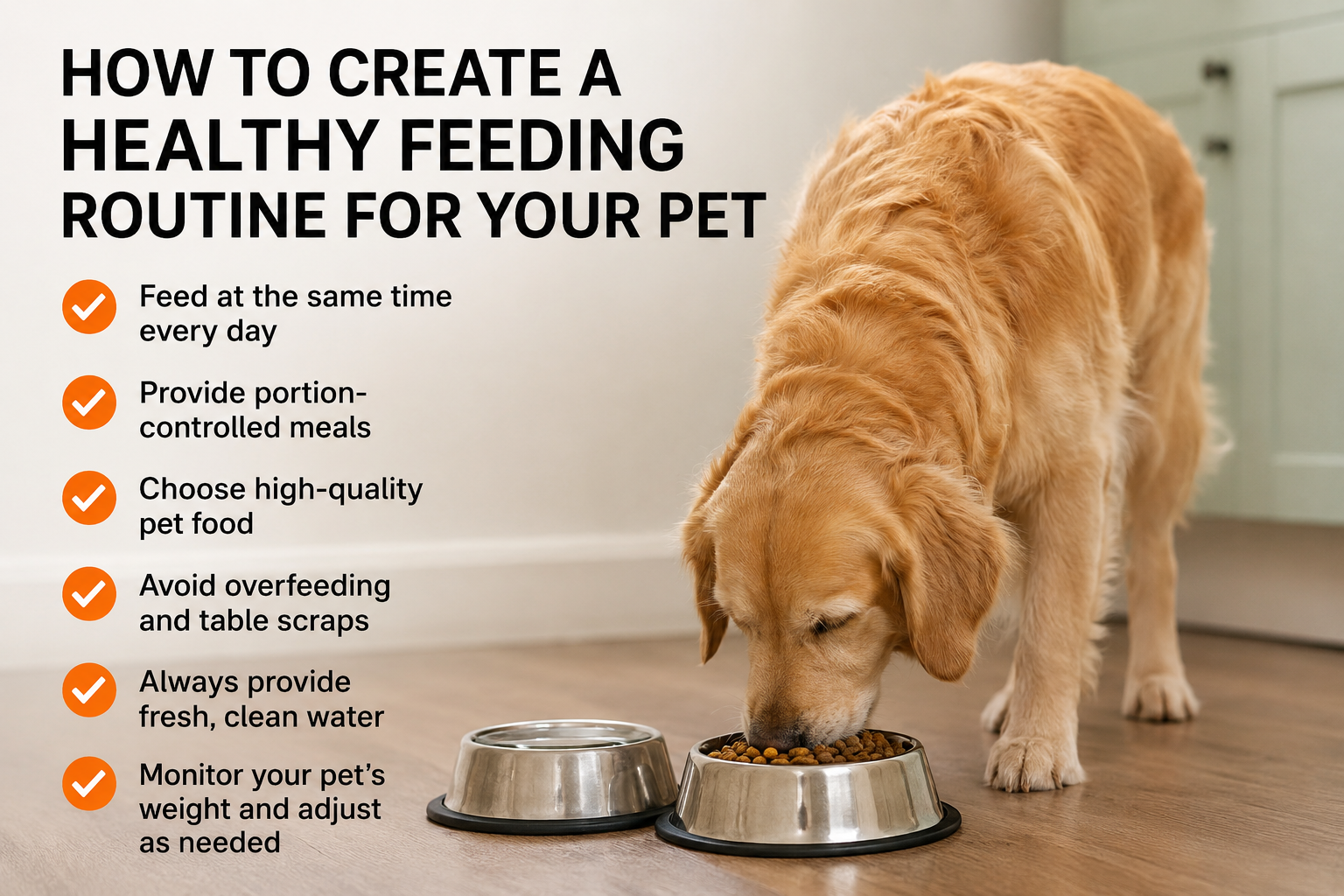
Creating a healthy feeding routine for your pet is one of the simplest ways to support good health, steady energy, and a happy life. Dogs and cats need regular meals that provide the right balance of nutrients, and they also benefit from consistent feeding times. A proper pet feeding routine can help prevent overeating, support healthy weight, improve digestion, and make it easier for pet owners to notice changes in appetite.
Every pet is different, so there is no single feeding schedule that works for every dog or cat. Age, size, activity level, health condition, and the type of pet food all affect feeding needs. By understanding these factors and following a few simple habits, you can create a feeding routine that works well for your pet.
Understand Your Pet’s Nutritional Needs
The first step in creating a healthy feeding routine is understanding what your pet needs nutritionally. Puppies and kittens usually need more frequent meals because they are growing quickly and require plenty of energy. Adult pets often do well with a consistent meal schedule, while senior pets may need food that is easier to digest and carefully controlled portions.
Dogs and cats also have different nutritional requirements. Cats need a diet that is rich in animal based protein and contains nutrients that are especially important for feline health. Dogs can enjoy a wider variety of foods, but they still need a balanced diet containing protein, fats, carbohydrates, vitamins, and minerals.
Choosing high quality pet food designed for your pet’s life stage is an important part of a healthy feeding routine. Always check the feeding recommendations on the food packaging and adjust portions according to your pet’s individual needs.
Set Consistent Feeding Times
Pets usually respond well to a predictable daily routine. Feeding your pet at approximately the same times each day can help create healthy eating habits and make mealtimes easier to manage.
For many adult dogs, two meals per day, one in the morning and one in the evening, can work well. Cats may also benefit from two or more smaller meals throughout the day. Some cats prefer smaller portions because this can better match their natural eating behavior.
A consistent schedule can also make it easier to identify changes in appetite. If your pet normally eats breakfast quickly but suddenly refuses food, you are more likely to notice the difference when meals are offered at regular times.
Measure Pet Food Portions Carefully
Portion control is one of the most important parts of a healthy pet feeding routine. Giving your pet too much food can lead to excessive weight gain, while giving too little may prevent them from getting the nutrients and energy they need.
Use a measuring cup or kitchen scale to measure your pet’s food rather than estimating the amount by eye. Feeding instructions on pet food packages can provide a useful starting point, but they should not be treated as exact rules for every animal.
Your pet’s ideal portion may change depending on activity level, age, body condition, and metabolism. If your pet is gaining weight, losing weight unexpectedly, or constantly acting hungry, consider discussing the feeding amount with a veterinarian.
Avoid Too Many Treats
Treats can be a useful part of training and can help strengthen the relationship between you and your pet. However, too many treats can add unnecessary calories to the daily diet.
When creating a healthy feeding routine, remember to include treats when thinking about your pet’s total daily food intake. Choose nutritious treats and offer them in moderate amounts.
It is also important to avoid giving table scraps regularly. Human foods can be high in fat, salt, or sugar and may not provide the nutrients your pet needs. Some common human foods can also be dangerous for dogs and cats.
Provide Fresh Water Every Day
A healthy feeding routine should always include access to fresh and clean drinking water. Water is essential for digestion, temperature regulation, circulation, and many other body functions.
Place clean water near your pet’s usual eating area and replace it regularly. Wash water bowls frequently to prevent the buildup of dirt and bacteria.
Cats that eat mostly dry food may be especially dependent on drinking enough water. Wet cat food can provide additional moisture, but fresh drinking water should still be available throughout the day.
Create a Calm Feeding Environment
The place where your pet eats can affect their feeding experience. Try to choose a quiet and comfortable location where your pet can eat without unnecessary stress or interruption.
If you have multiple pets, feeding them separately may help prevent competition over food. Some animals eat too quickly when another pet is nearby. Separate feeding areas can make mealtimes calmer and help you monitor how much each pet is actually eating.
Keep food bowls in a clean area and wash them regularly. Clean feeding equipment is an important part of maintaining good pet hygiene.
Choose the Right Type of Pet Food
The quality of pet food plays an important role in your pet’s overall nutrition. Look for food that is appropriate for your pet’s species, age, size, and lifestyle.
Puppy food and kitten food are formulated to support growth, while adult pet food is designed for maintenance. Senior pet food may have different nutritional characteristics to support older animals.
If your pet has a specific health concern, a veterinarian may recommend a specialized diet. Avoid changing your pet’s food suddenly unless there is a good reason to do so. A gradual transition can help reduce digestive problems.
Watch Your Pet’s Body Condition
A healthy feeding routine is not only about the amount of food in the bowl. You should also pay attention to your pet’s body condition.
Regularly look at your pet’s weight, body shape, energy level, coat quality, and general behavior. A pet that is becoming overweight may need smaller portions or more physical activity. A pet that is losing weight without an obvious reason may need professional attention.
Regular weight checks can help you identify changes early. If you are unsure whether your pet is at a healthy weight, ask a veterinarian for guidance.
Adjust Feeding as Your Pet Ages
Your pet’s nutritional needs can change throughout life. Young animals need food that supports growth and development. Adult pets generally need a balanced maintenance diet, while senior animals may benefit from adjusted calories and specific nutrients.
Activity levels can also change with age. A highly active young dog may need more calories than an older dog that spends most of the day resting.
For this reason, avoid using the same feeding amount for your pet for many years without reviewing their needs. Regularly reassess the feeding routine as your pet grows older or changes lifestyle.
Make Feeding Part of a Daily Routine
Pets often feel more comfortable when their daily activities follow a predictable pattern. Try to connect feeding times with other regular activities such as walks, playtime, or bedtime.
For example, a dog might have breakfast after a morning walk and dinner after an evening activity. This creates a simple routine that can be easy for both the pet and the owner to follow.
Cats may also benefit from predictable meal times combined with play sessions. A routine can help reduce boredom and provide structure during the day.
Avoid Free Feeding When It Causes Problems
Leaving food available all day may work for some pets, but it is not ideal for every animal. Free feeding can make it difficult to know how much food your pet has consumed, especially if the bowl is constantly refilled.
Some pets naturally control their food intake, while others may eat whenever food is available. If your pet tends to overeat, scheduled meals with measured portions may be a better choice.
Scheduled feeding also makes it easier to monitor appetite and recognize changes in eating behavior.
Introduce Food Changes Slowly
If you decide to change your pet’s food, avoid making the switch suddenly. A gradual transition can give your pet’s digestive system time to adjust.
Start by mixing a small amount of the new food with the current food. Slowly increase the amount of new food while reducing the old food over several days.
If your pet develops persistent vomiting, diarrhea, refuses food, or shows other concerning symptoms after a diet change, contact a veterinarian.
Keep Mealtimes Safe
Food safety is another important part of a healthy feeding routine. Store pet food in a cool, dry place and keep the container properly closed. Follow storage instructions on the package and avoid feeding food that looks spoiled or has an unusual smell.
Keep potentially harmful human foods away from pets. Foods such as chocolate, onions, garlic, grapes, raisins, and certain sweeteners can be dangerous for animals.
Also avoid giving bones or other foods that could cause choking or digestive problems unless they are specifically considered safe for your pet.
Monitor Eating Behavior
Pay attention to how your pet behaves during meals. Eating too quickly can sometimes cause problems, particularly in dogs. Slow feeding bowls, puzzle feeders, or smaller meals may help pets that finish their food extremely quickly.
On the other hand, a sudden loss of appetite should not always be ignored. Changes in eating habits can sometimes indicate stress, dental problems, digestive issues, or other health concerns.
Knowing your pet’s normal eating behavior makes it easier to notice unusual changes.
Conclusion
Creating a healthy feeding routine for your pet does not have to be complicated. The most important steps are choosing suitable pet food, measuring portions, maintaining consistent meal times, providing fresh water, limiting treats, and monitoring your pet’s weight and eating behavior.
A good feeding routine should change when your pet’s needs change. Puppies, kittens, adult pets, and senior animals all have different nutritional requirements. Activity level and health conditions can also affect the amount and type of food your pet needs.
With regular meals, proper portions, nutritious pet food, and careful observation, you can build feeding habits that support your pet’s long term health and wellbeing. A consistent and thoughtful feeding routine is a simple daily habit that can make a meaningful difference in your pet’s life.