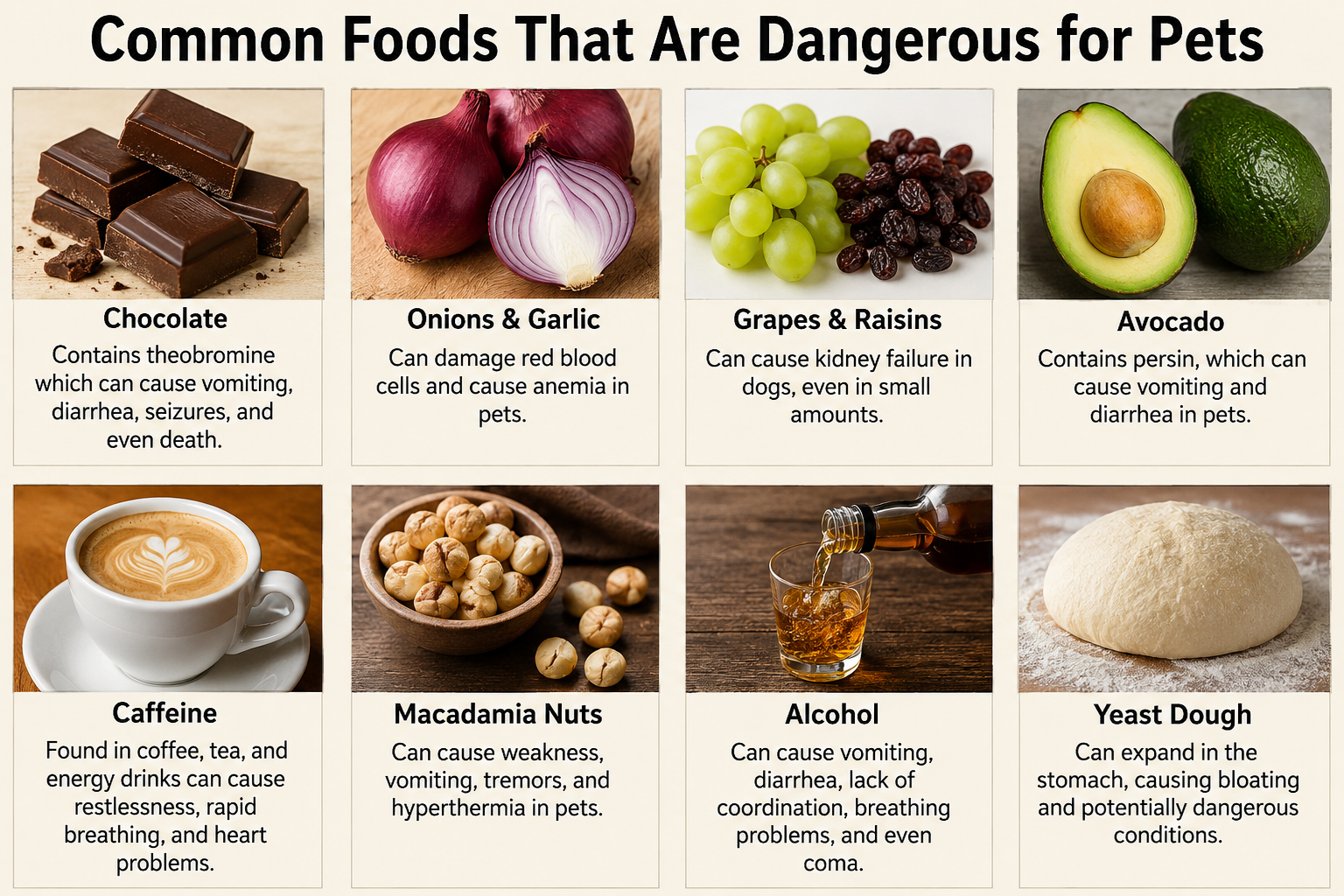
Pets are an important part of our families, and many pet owners love sharing food with their dogs and cats. It can feel harmless to give your pet a small bite from your plate, but some common human foods can be dangerous for pets. Certain foods may cause stomach problems, while others can lead to serious poisoning, organ damage, or even life threatening conditions.
Knowing which foods are dangerous for pets is one of the easiest ways to protect your animal companion. Dogs and cats have different nutritional needs from humans, and their bodies may react badly to ingredients that people can eat safely. This article explains some of the most common toxic foods for dogs and cats and why pet owners should keep them away from their pets.
Why Some Human Foods Are Dangerous for Pets
The digestive systems of pets are different from those of humans. Their bodies process certain ingredients in different ways, and some substances that are safe for people can be toxic to animals. The size of a pet also matters. A small amount of a harmful food may have a much stronger effect on a small dog or cat than on a larger animal.
Another problem is that pets may eat foods without understanding that they are dangerous. A dog may grab food from a kitchen counter, while a cat may lick a plate or investigate a grocery bag. For this reason, pet owners should know about dangerous foods and store them safely.
Chocolate
Chocolate is one of the best known dangerous foods for dogs and cats. It contains substances called theobromine and caffeine, which pets cannot process as efficiently as humans.
Dark chocolate, baking chocolate, and cocoa powder usually contain higher amounts of these substances and can be especially dangerous. Eating chocolate may cause vomiting, diarrhea, restlessness, rapid breathing, increased heart rate, muscle tremors, seizures, and other serious problems.
If your pet eats chocolate, do not wait for symptoms to appear. Contact a veterinarian as soon as possible and provide information about the type and amount of chocolate consumed.
Onions and Garlic
Onions and garlic can be harmful to both dogs and cats. These foods can damage red blood cells and may lead to anemia. Cats can be particularly sensitive to members of the onion family.
The danger is not limited to fresh onions or garlic. Powdered forms and ingredients found in sauces, soups, seasonings, and processed foods can also cause problems.
Signs of illness may include weakness, tiredness, vomiting, reduced appetite, and unusual breathing. Pet owners should avoid feeding foods containing onions, garlic, or concentrated seasonings to their animals.
Grapes and Raisins
Grapes and raisins may look like healthy snacks, but they can be dangerous for dogs. In some dogs, eating grapes or raisins has been associated with serious kidney problems.
The amount that causes a reaction can vary, and it is difficult for owners to know whether a particular amount is safe. Because of this uncertainty, grapes and raisins should not be given to dogs.
If a dog eats grapes or raisins, contact a veterinarian promptly. Early action can be important because kidney damage can become serious.
Xylitol
Xylitol is a sweetener used in many sugar free products. It can be found in some chewing gums, candies, baked products, dental products, and other items.
Xylitol can be extremely dangerous for dogs. It may cause a sudden drop in blood sugar and can also lead to serious liver problems. Symptoms can include weakness, shaking, loss of coordination, vomiting, and collapse.
Always check food labels before giving human food to your dog. Products containing xylitol should be kept completely away from pets.
Alcohol
Alcohol is not safe for pets. Even small amounts can cause serious problems because animals are much smaller than humans and have different abilities to process alcohol.
Alcohol can affect the nervous system and may cause vomiting, weakness, difficulty walking, breathing problems, low body temperature, and other dangerous symptoms.
Pet owners should never intentionally give alcoholic drinks to pets. Alcoholic beverages should also be stored where animals cannot reach them.
Coffee and Caffeine
Coffee, tea, energy drinks, and other caffeinated products can be dangerous for pets. Caffeine can affect the heart and nervous system of dogs and cats.
Pets that consume caffeine may experience restlessness, rapid heartbeat, shaking, vomiting, or seizures. Coffee grounds and tea bags can be especially concerning because they may contain concentrated amounts of caffeine.
Keep coffee cups, tea, energy drinks, and caffeine containing products away from curious pets.
Macadamia Nuts
Macadamia nuts are another food that can be toxic to dogs. They may cause weakness, vomiting, tremors, fever, and difficulty walking.
The exact reason these nuts affect dogs is not fully understood, but pet owners should avoid giving them to dogs. Products containing macadamia nuts should also be kept away from pets.
Raw Dough
Raw yeast dough can become dangerous if a dog or cat eats it. The dough can expand inside the stomach, causing discomfort and potentially serious digestive problems. Fermentation can also produce alcohol, which adds another risk.
Keep rising dough away from pets, especially when preparing homemade bread or other baked foods.
Fatty Foods
Fatty foods such as fried foods, greasy meat, and foods containing large amounts of animal fat can cause digestive problems in pets. In some cases, eating a large amount of fat may contribute to pancreatitis, which can be a serious condition.
Pets do not need greasy table scraps to have a healthy diet. It is better to provide food made specifically for their nutritional needs.
Bones
Many people believe that giving pets bones is natural, but some bones can cause serious injuries. Cooked bones can become brittle and may break into sharp pieces. These pieces can damage the mouth, throat, stomach, or intestines.
Bones may also cause choking or intestinal blockage. For these reasons, pet owners should be careful about giving bones and should choose safer chewing options recommended for their particular pet.
Salty Foods
Too much salt can be harmful to pets. Foods such as chips, heavily salted snacks, processed meats, and some packaged foods may contain much more salt than an animal needs.
Excessive salt intake can cause increased thirst, vomiting, diarrhea, weakness, tremors, and other health problems. Pets should have access to fresh water and should not be given salty human snacks regularly.
Avocado
Avocado is another food that requires caution around pets. The plant contains a substance called persin, and the large pit can also create a choking or blockage risk.
Although the level of risk can vary between animal species, it is best to prevent pets from eating avocado, especially the pit, skin, and large pieces.
Dairy Products
Many adult dogs and cats have difficulty digesting lactose. Milk, ice cream, and other dairy products may cause stomach upset, diarrhea, or gas in sensitive pets.
A tiny amount may not cause a serious problem in every animal, but dairy products should not be considered a regular part of a pet’s diet. Pet owners should choose appropriate pet treats instead.
What to Do If Your Pet Eats a Dangerous Food
If your pet eats something potentially toxic, stay calm and act quickly. Try to identify what your pet ate, how much was consumed, and approximately when it happened. Keep the packaging or food label if possible because the ingredients can help a veterinarian determine the level of risk.
Do not try random home remedies or make your pet vomit unless a veterinarian specifically tells you to do so. Some substances can cause more damage if they are brought back up.
Contact your veterinarian or an emergency veterinary service as soon as possible if you believe your pet has eaten a toxic food. If your pet is showing severe symptoms such as collapse, seizures, difficulty breathing, or unconsciousness, seek emergency veterinary care immediately.
How to Prevent Food Poisoning in Pets
Preventing access to dangerous foods is easier than dealing with poisoning. Keep human food on secure surfaces and avoid leaving plates unattended. Store chocolate, sweets, coffee, grapes, raisins, onions, garlic, and other harmful foods in closed cupboards.
Teach children not to feed pets from their plates without permission. Guests should also know that certain foods can be dangerous for animals.
It is also helpful to keep pet food and treats separate from human snacks. Check ingredient labels and choose products made specifically for your pet’s age, size, and nutritional needs.
Conclusion
Understanding common foods that are dangerous for pets can help protect dogs and cats from accidental poisoning and serious health problems. Chocolate, onions, garlic, grapes, raisins, xylitol, alcohol, caffeine, macadamia nuts, raw dough, fatty foods, bones, and excessive salt are among the foods that pet owners should keep away from animals.
Pets depend on their owners to make safe food choices for them. Instead of sharing random table scraps, provide balanced pet food and treats that are appropriate for your animal. If your pet accidentally eats a potentially dangerous food, contact a veterinarian quickly and avoid treating the problem yourself without professional advice.
A little awareness can make a big difference. By learning about toxic foods for pets and keeping dangerous ingredients out of reach, you can create a safer home and help your pet enjoy a healthier and happier life.