Storing pet food safely at home is an important part of keeping your dog or cat healthy. Many pet owners focus on choosing high quality food but forget that proper storage is just as important. Pet food can lose its freshness, taste, and nutritional quality when it is exposed to heat, moisture, air, or direct sunlight. Poor storage can also attract insects and rodents and may increase the risk of food contamination.
Learning how to store pet food safely at home can help protect your pet from stomach problems and other health concerns. Whether you buy dry pet food, wet food, treats, or homemade meals, the right storage method can make a big difference. This guide explains simple and practical pet food storage tips that every pet owner can follow.
Choose a Cool and Dry Storage Area
The first step in safe pet food storage is choosing the right place. Dry pet food should be kept in a cool and dry area away from direct sunlight. Heat and sunlight can affect the quality of the food and may cause fats in the food to become spoiled over time.
A kitchen cabinet, pantry, or another clean storage area can be a good choice. However, avoid places that become very hot, such as areas next to an oven, stove, radiator, or heating appliance.
Moisture is another important concern. Pet food should not be stored in damp areas because moisture can encourage mold growth and reduce food quality. Always choose a dry location with normal indoor temperatures.
Keep Dry Pet Food in Its Original Bag
One of the best pet food storage tips is to keep dry food in its original packaging. The original bag is designed to protect the food and usually contains important information such as the expiration date, batch number, feeding instructions, and product details.
Instead of throwing the bag away and transferring everything into another container, place the entire bag inside an airtight storage container if possible. This gives your pet food an extra layer of protection while keeping the original information available.
If you prefer to pour food directly into a container, keep the original packaging nearby so you can check the expiration date and product information when needed.
Use an Airtight Pet Food Container
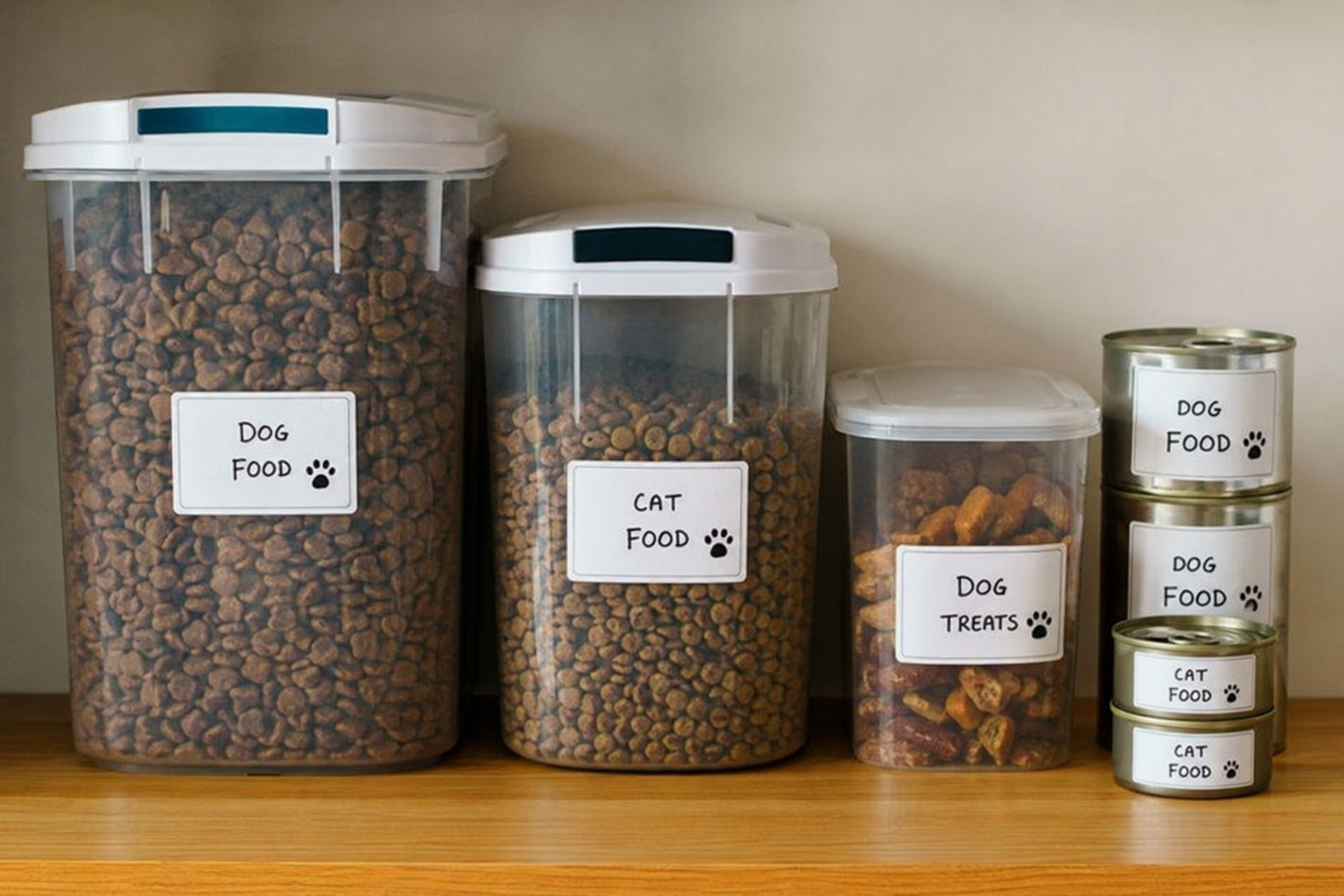
An airtight pet food container can help protect dry food from air, moisture, insects, and household pests. Choose a container made from food safe material that is strong, clean, and easy to close.
The container should be large enough to hold the amount of food you normally purchase without forcing the food into a small space. A tight fitting lid is especially important because loose covers may allow air and moisture to enter.
It is also a good idea to avoid storing large amounts of pet food for very long periods. Buying a reasonable quantity that your pet can eat while it is still fresh is often better than keeping a huge bag for many months.
Clean the Storage Container Regularly
A pet food container should be cleaned regularly. Do not simply keep adding new food on top of old food. Small amounts of leftover food can become stale and may leave oil or crumbs inside the container.
Before adding a new bag of food, empty the container completely. Wash it with warm water and suitable dish soap, then rinse it properly and allow it to dry completely.
Never put fresh dry pet food into a wet container. Even a small amount of moisture can affect food quality and create an environment where mold can develop.
Follow the First In First Out Method
The first in first out method is a simple way to manage pet food at home. Use older food before opening a newer package. This helps prevent food from sitting unused for too long.
When buying pet food, check the expiration date before purchasing it. At home, place the older package where it is easy to reach and keep newer packages behind it.
This simple habit can reduce waste and help ensure that your pet receives fresh food.
Store Wet Pet Food Carefully
Wet pet food requires different storage than dry food. Unopened cans and pouches should usually be kept in a cool, dry place away from sunlight and heat.
Once wet pet food has been opened, it should not be left sitting at room temperature for a long time. Place unused food in a clean covered container and refrigerate it according to the product instructions.
Do not leave opened wet food in an uncovered can inside the refrigerator. Covering the food helps protect it from odors and contamination from other foods.
Always check the manufacturer’s storage instructions because different pet food products can have different requirements.
Handle Pet Food With Clean Hands
Clean handling is another important part of pet food safety. Wash your hands before and after handling pet food, especially when preparing wet food or homemade meals.
Use clean bowls and utensils when serving food. Avoid using dirty measuring cups or spoons that may carry bacteria or old food particles.
Pet food should also be kept away from household cleaning products, chemicals, pesticides, and other substances that could contaminate it.
Keep Pet Food Away From Children and Pests
Pet food should be stored in a secure place where children and pets cannot open the container themselves. A curious pet may eat too much food at once, which can cause digestive problems and unnecessary weight gain.
Storage should also protect food from insects and rodents. Open bags of food can attract pests, especially when they are kept on the floor or in an open area.
A strong airtight container with a secure lid is one of the easiest ways to reduce this risk. Keeping the storage area clean also helps prevent pests.
Store Pet Treats Properly
Pet treats should be treated like regular pet food. Keep them in a clean, dry, and tightly sealed container after opening the package.
Always follow the storage instructions printed on the package. Some soft treats may need refrigeration after opening, while many dry treats can be stored at room temperature.
Avoid giving your pet treats that smell strange, look unusual, or have changed texture. When in doubt, it is safer to throw them away.
Do Not Mix Old and New Food
Mixing old pet food with a new bag may seem convenient, but it can make proper food rotation more difficult. If the older food has lost freshness, the new food can become exposed to the same conditions.
Instead, finish the older food first and clean the storage container before adding the new food. This keeps your storage system cleaner and makes it easier to monitor the condition of the food.
Check Pet Food Before Serving
Make it a habit to inspect pet food before giving it to your pet. Look for changes in smell, color, texture, or appearance.
Dry food that feels unusually moist or has an unusual smell should not be served. Similarly, wet food with an unusual appearance or smell should be discarded.
Check the packaging for damage as well. Swollen, leaking, torn, or badly damaged packaging can be a reason to avoid using the product.
Pay Attention to Expiration Dates
Expiration dates are important when storing pet food safely at home. Try to purchase food with enough time remaining before the expiration date.
Keep packages organized so that you can easily see which food should be used first. Avoid buying more food than your pet can reasonably consume before its quality declines.
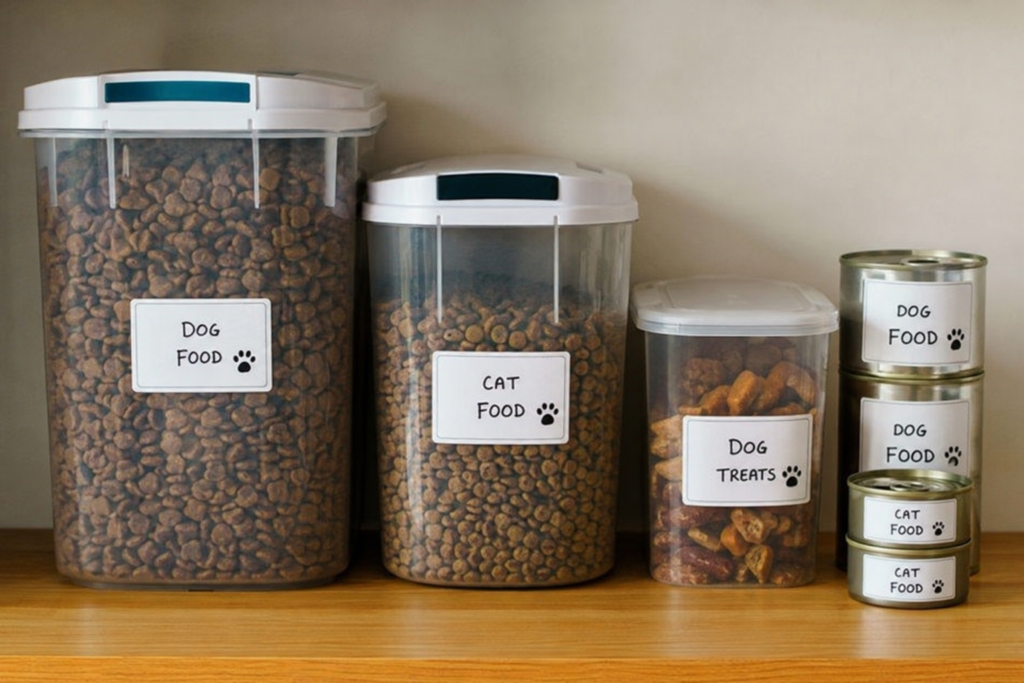
If you have several pets with different diets, label their food clearly. This can prevent accidental feeding of the wrong product.
Keep Food Bowls Clean
Safe pet food storage does not end with the storage container. Your pet’s food bowl should also be cleaned regularly.
Leftover food can attract bacteria, insects, and unpleasant odors. Wash bowls after meals, especially when serving wet food. Provide fresh drinking water every day and keep water bowls clean as well.
Clean feeding equipment helps create a healthier eating environment for your pet.
What About Homemade Pet Food?
Homemade pet food requires extra care because it may spoil faster than commercially prepared dry food. Fresh homemade meals should be handled carefully and stored in the refrigerator when they are not being served.
Divide larger portions into smaller containers so that food can cool and be used easily. Avoid leaving homemade meals at room temperature for extended periods.
If you regularly prepare homemade meals for your pet, talk with a veterinarian or qualified animal nutrition professional to make sure the diet provides all the nutrients your pet needs.
Final Thoughts
Knowing how to store pet food safely at home is an easy way to protect your pet’s health and reduce unnecessary food waste. Keep dry pet food in a cool and dry place, preferably in its original packaging inside an airtight container. Store wet food correctly after opening and refrigerate it when required. Clean storage containers regularly and never mix fresh food with old leftovers.
Always check expiration dates and inspect food before serving it. Keep pet food away from moisture, heat, chemicals, children, and pests. Clean food bowls and feeding equipment regularly as well.
Good pet food storage habits take only a few minutes but can make a meaningful difference. By following these simple pet food storage tips, you can help keep your pet’s meals fresh, safe, and enjoyable every day.