Choosing the best food for kittens and growing cats is one of the most important decisions a pet owner can make. Kittens grow very quickly during their first year of life, so they need more energy, protein, vitamins, and minerals than adult cats. The right kitten food supports healthy bones, strong muscles, brain development, a healthy immune system, and steady growth.
A kitten may look small and playful, but its body is working hard to develop. Because of this, feeding a kitten with ordinary adult cat food may not provide everything it needs. A balanced diet made especially for kittens is usually a better choice. In this article, we will discuss the best food for kittens and growing cats, important nutrients, feeding habits, and simple tips for choosing healthy kitten food.
Why Kittens Need Special Food
Kittens have different nutritional needs compared with adult cats. During the growing stage, their bodies need plenty of calories and nutrients to support rapid development. They also have smaller stomachs, which means they cannot eat very large meals at one time.
Good kitten food contains higher levels of protein, fat, and certain vitamins and minerals than many adult cat foods. Protein helps build muscles and tissues, while healthy fats provide energy and support brain and eye development.
Kittens also need a balanced amount of calcium and phosphorus for healthy bones and teeth. A proper balance is important because too much or too little of certain minerals can affect normal growth.
For these reasons, pet owners should look for food that is specifically formulated for kittens or growing cats.
Protein Is Important for Growing Cats
Protein is one of the most important nutrients in a kitten’s diet. Cats are natural carnivores, and animal based protein provides many of the amino acids they need for normal development.
High quality kitten food should contain a good source of animal protein such as chicken, turkey, beef, fish, or another suitable meat ingredient. Protein supports muscle development, tissue repair, healthy skin, and a strong immune system.
When choosing the best food for kittens, check the ingredient list and look for a quality protein source near the beginning. A diet with appropriate protein can help a young cat grow stronger and remain active.
Healthy Fats for Energy and Development
Growing kittens are naturally active. They run, jump, play, and explore their surroundings throughout the day. Because of this activity, they require a good amount of energy.
Healthy fats are an important source of calories for growing cats. They also help the body absorb certain vitamins and support healthy skin and a shiny coat.
Omega 3 fatty acids are especially useful during kitten development. Certain sources of these fats can support brain and eye development. Fish oil and some types of fish are common sources, although the overall diet should remain balanced.
Wet Food or Dry Food for Kittens
Both wet food and dry food can be useful for kittens when they are properly formulated for growth.
Wet kitten food contains a high amount of moisture, which can help kittens get more water through their diet. It is also soft and may be easier for very young kittens to eat.
Dry kitten food is convenient, easy to store, and can be offered as part of a balanced feeding routine. Some kittens enjoy the texture of dry food, while others prefer wet food.
Many pet owners choose to feed a combination of wet and dry kitten food. This can provide variety while also supporting hydration and convenient feeding. The most important thing is to choose nutritionally complete food designed for kittens.
Essential Vitamins and Minerals
Vitamins and minerals play an important role in kitten growth. Calcium and phosphorus support developing bones and teeth. Vitamin A supports vision and immune function, while other vitamins help with normal body functions.
Taurine is another important nutrient for cats. It supports normal heart and eye health and is naturally found in animal tissues. Cats need taurine in their diet because they cannot produce enough of it on their own.
A complete commercial kitten food should provide the appropriate amounts of essential vitamins, minerals, amino acids, and other nutrients. Adding supplements without professional advice is generally unnecessary and may sometimes create nutritional imbalances.
How Often Should You Feed a Kitten?
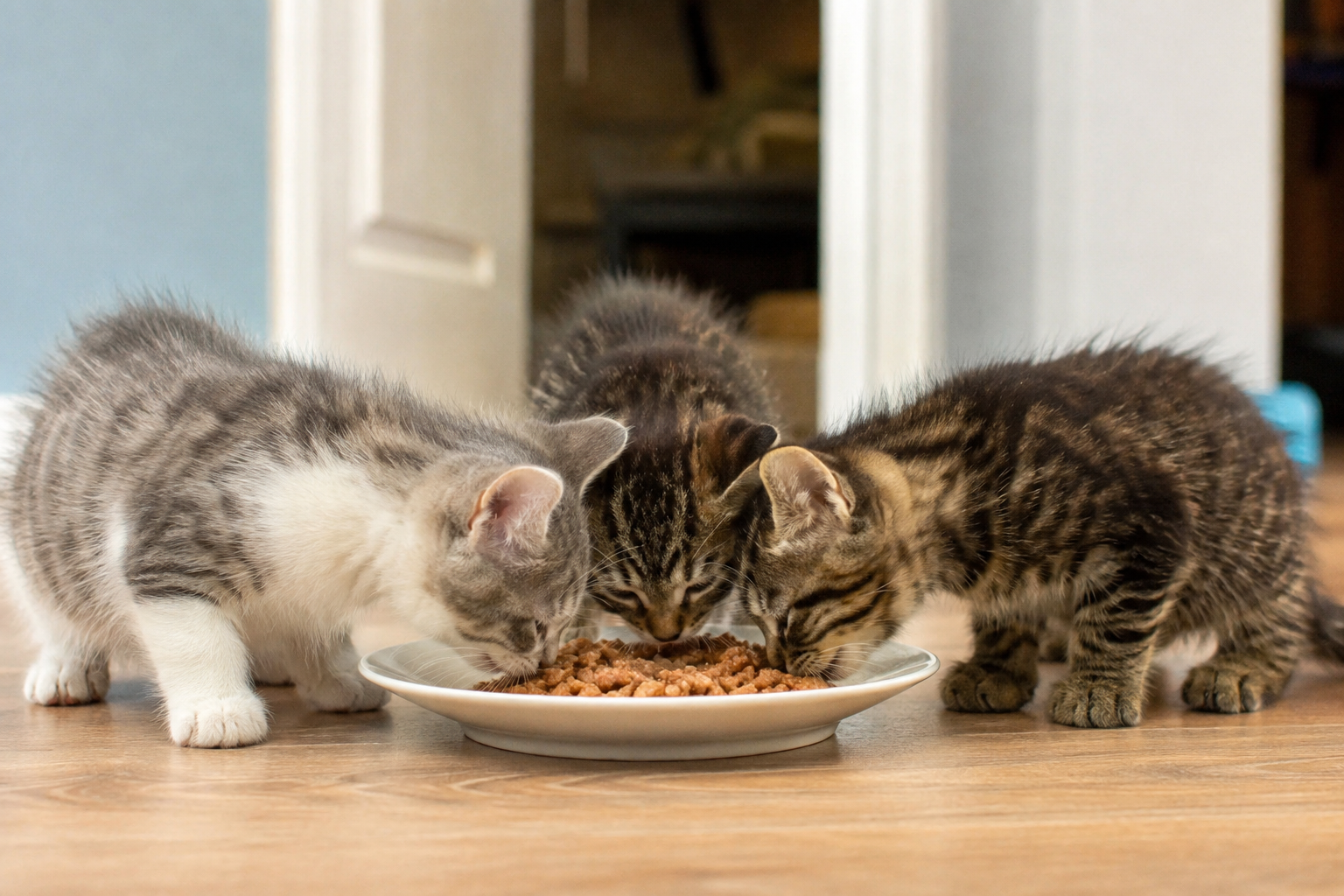
Young kittens usually need several small meals because their stomachs are small and their energy needs are high. The exact feeding schedule depends on the kitten’s age, size, activity level, and the type of food being offered.
Very young kittens may need more frequent feeding, while older kittens can gradually move toward fewer meals. Always follow the feeding instructions on the food package and adjust portions according to the kitten’s growth and body condition.
Fresh drinking water should always be available. If a kitten eats mostly dry food, providing easy access to clean water becomes especially important.
Choosing the Best Kitten Food
There are many kitten food products available, so choosing one can sometimes feel confusing. Start by checking the label. Look for food that is clearly made for kittens or growth.
The food should provide complete and balanced nutrition. A quality product should contain appropriate amounts of protein, fat, vitamins, and minerals for a growing cat.
Consider your kitten’s individual needs as well. Some kittens may have food sensitivities, digestive problems, or other special nutritional requirements. In these situations, it is best to discuss food choices with a veterinarian.
Price is also worth considering, but the cheapest option is not always the best value. A nutritious diet can support healthy growth and may help reduce problems related to poor nutrition.
Foods Kittens Should Avoid
Not every food that humans eat is safe for cats. Kittens should not be given random table scraps or foods that may contain harmful ingredients.
Chocolate, onions, garlic, alcohol, and some other human foods can be dangerous for cats. Bones can also create risks, especially when they break into sharp pieces.
Raw diets also require careful consideration because they can create nutritional and food safety concerns if they are not properly formulated and handled. Homemade kitten food should not be prepared casually because growing cats require precise nutrition.
If you want to feed homemade food to a growing kitten, professional veterinary nutritional guidance is important.
Signs Your Kitten Is Eating Well
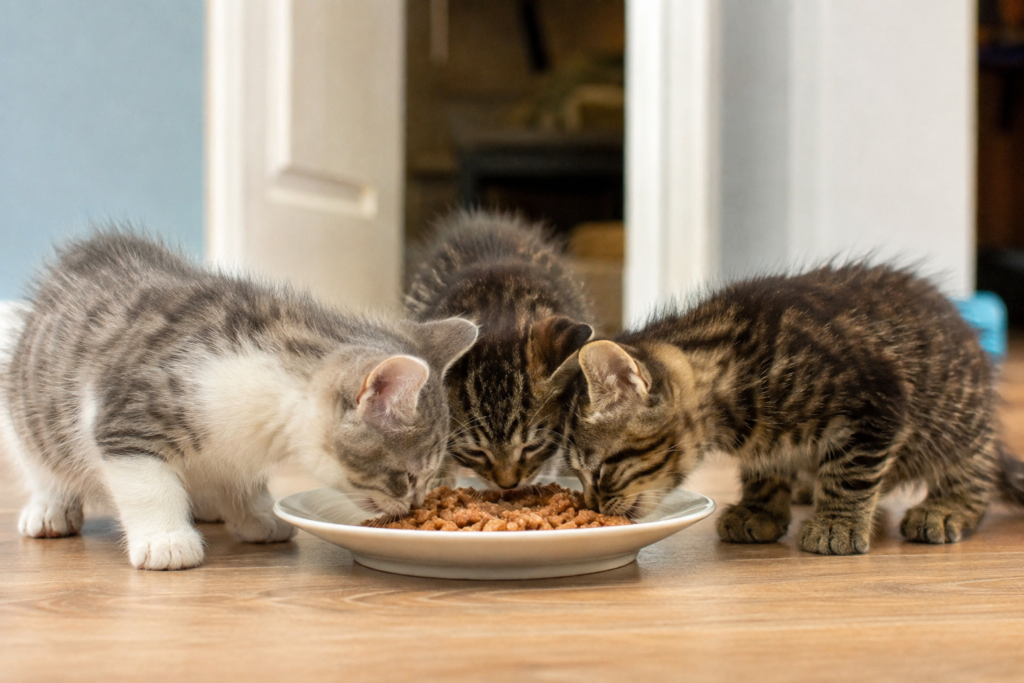
A healthy kitten is usually active, curious, and playful. A good diet can support steady growth, healthy skin, a soft coat, and normal energy levels.
Regular body weight checks can help you understand whether your kitten is growing appropriately. Rapid weight gain, poor growth, weakness, persistent diarrhea, vomiting, or loss of appetite should not be ignored.
Every kitten is different, so there is no single food amount that works for every growing cat. If you are unsure about your kitten’s weight or feeding routine, a veterinarian can provide guidance based on the kitten’s age, size, and overall condition.
Transitioning to New Kitten Food
If you decide to change your kitten’s food, make the change gradually. Suddenly switching food can sometimes cause digestive upset.
Start by mixing a small amount of the new food with the current food. Gradually increase the amount of new food over several days while reducing the old food.
Watch your kitten during the transition. If digestive problems continue or become severe, speak with a veterinarian.
Food for Different Stages of Kitten Growth
A kitten’s nutritional needs change as it grows. Very young kittens need highly digestible food and frequent meals. As they become older, they can eat larger portions and usually require fewer meals.
During the later kitten stage, they still need food designed for growth because their bodies are continuing to develop. Many cats are ready to transition to adult food around one year of age, although the appropriate timing can vary depending on the cat.
Large breed cats may mature more slowly, so their nutritional needs can be different. Always consider the individual cat rather than relying only on age.
Final Thoughts
The best food for kittens and growing cats is food that provides complete and balanced nutrition for healthy development. A good kitten diet should contain quality protein, healthy fats, appropriate calories, essential vitamins, minerals, and important nutrients such as taurine.
Both wet and dry kitten food can be suitable when they are properly formulated. Feeding the right portions, providing fresh water, and choosing food made specifically for growing cats can make a major difference in a kitten’s development.
Remember that nutrition is only one part of good kitten care. Regular veterinary visits, exercise, a safe environment, fresh water, and plenty of attention are also important. By giving your kitten a balanced diet from the beginning, you can help support strong growth and build a healthy foundation for the years ahead.