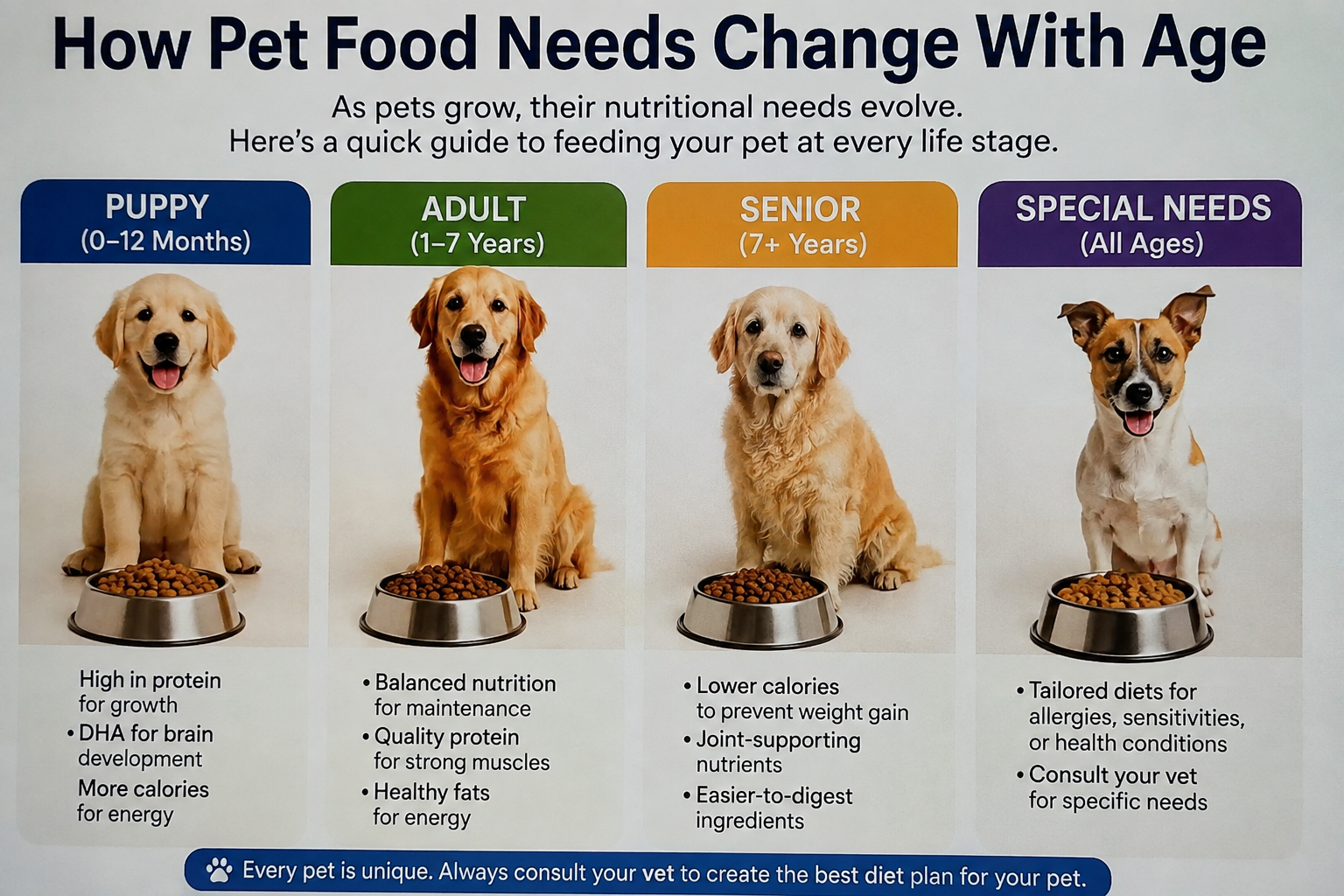
Pet food needs change throughout a pet’s life. A young puppy or kitten needs different nutrients than an adult dog or cat, while senior pets often need a diet that supports healthy aging. Choosing the right food for each life stage is important for maintaining healthy growth, strong muscles, good energy levels, and overall wellbeing. Many pet owners continue feeding the same food for years without considering how their pet’s nutritional needs have changed. Understanding age appropriate pet nutrition can help you make better feeding decisions and support your pet at every stage of life.
Why Pet Food Needs Change With Age
Pets go through several stages of life, and their bodies change as they grow. Their metabolism, activity level, muscle development, digestion, and nutritional requirements are not the same at every age.
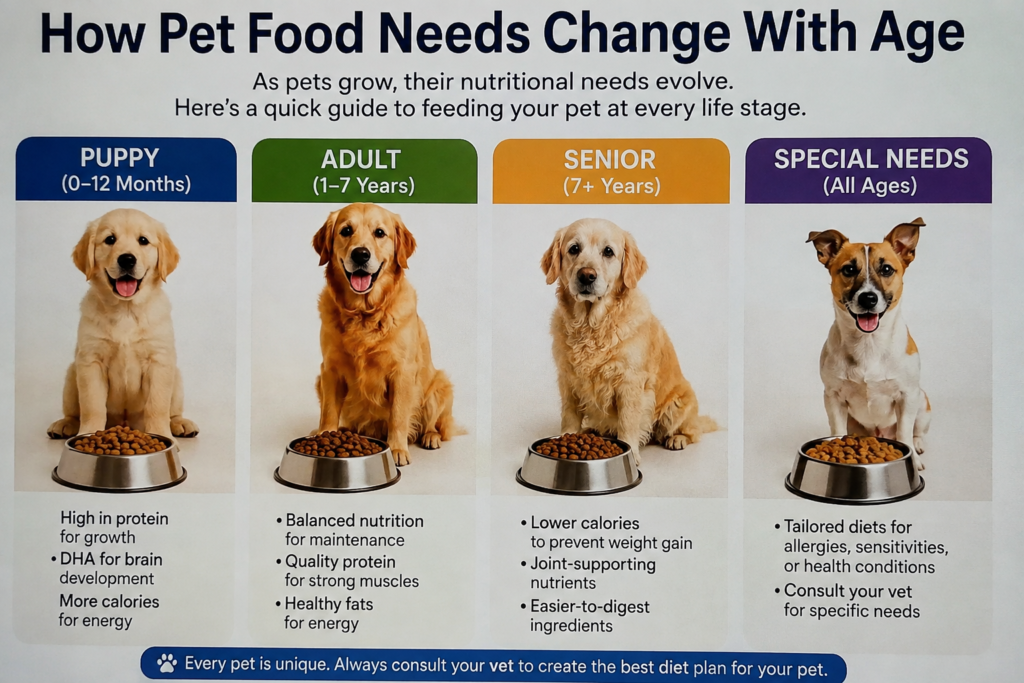
Young pets are growing rapidly and need more energy, protein, vitamins, and minerals to support bones, muscles, organs, and brain development. Adult pets usually need a balanced diet that helps maintain their weight, muscles, energy, and general health. Senior pets may become less active and can require fewer calories while benefiting from nutrients that support joints, digestion, muscles, and healthy aging.
This is why choosing the best pet food for different life stages is an important part of responsible pet care.
Pet Food Needs for Puppies and Kittens
Puppies and kittens need food that supports rapid growth and development. Their bodies are building bones, muscles, teeth, organs, and other tissues, so they require a nutrient rich diet.
Protein is especially important during early life because it helps build and maintain growing muscles and tissues. Young pets also need sufficient calories because they usually have high energy requirements. However, the exact amount depends on their breed, size, activity level, and individual development.
Puppy food and kitten food are generally designed to provide nutrients needed during growth. These foods may contain appropriate levels of protein, fat, vitamins, and minerals for developing pets.
Large breed puppies have additional nutritional considerations because growing too quickly can create problems with bone and joint development. Their food should be selected carefully according to veterinary guidance and the pet’s expected adult size.
Kittens also need a diet designed for growth because they develop quickly during their first year. Feeding a complete and balanced kitten food can help provide the nutrients needed for healthy development.
Feeding Young Pets the Right Amount
Giving a growing pet too much food is not always better. Excessive feeding can contribute to unhealthy weight gain, while insufficient food can prevent proper growth.
Young pets usually need several meals throughout the day because their stomachs are smaller and their energy requirements are high. As they grow, feeding schedules can gradually change.
Pet owners should follow feeding instructions on the food package while considering their pet’s body condition and activity level. A veterinarian can also help determine whether the pet is receiving an appropriate amount of food.
Adult Pet Food Requirements
Once pets reach adulthood, their nutritional priorities change. Instead of supporting rapid growth, their diet should focus on maintaining a healthy body.
Adult dogs and cats need a complete and balanced diet containing appropriate amounts of protein, fat, carbohydrates, vitamins, minerals, and other essential nutrients.
Protein remains important because it supports muscle maintenance and normal body functions. Healthy fats provide energy and can support skin and coat health. Vitamins and minerals help support normal immune function, bones, teeth, and other body systems.
Adult pets also need the right number of calories. If a pet eats more calories than it uses, it may gain excess weight. Obesity can affect mobility and overall quality of life, so portion control is an important part of adult pet nutrition.
Food Needs for Active Adult Pets
Not every adult pet has the same energy requirements. A highly active working dog may need more calories than a dog that spends most of the day resting at home.
Similarly, an active outdoor cat may use more energy than an indoor cat.
Activity level should therefore be considered when selecting pet food and determining portions. Pets that exercise frequently may benefit from a diet with sufficient energy and protein, while less active pets may need fewer calories.
Regularly checking body condition can help identify whether feeding amounts need to be adjusted.
How Pet Food Changes for Middle Aged Pets
As pets move from young adulthood into middle age, their metabolism and activity levels may gradually change. Some pets become less active and start gaining weight even though their feeding routine has not changed.
This is a good time to review your pet’s diet. A food with appropriate calorie levels can help maintain a healthy weight. Portion sizes may also need adjustment.
Middle aged pets can also benefit from high quality protein because maintaining muscle becomes increasingly important. Keeping a healthy body weight can reduce unnecessary stress on the joints and support mobility.
Pet owners should not wait until a pet becomes elderly before paying attention to changing nutritional needs. Small adjustments during middle age can support better long term health.
Senior Pet Food Needs
Senior pets often require a different approach to nutrition. As dogs and cats age, they may become less active and lose muscle more easily. Their digestion may also change, and some older pets may have specific nutritional requirements.
Senior pet food is often designed with the needs of aging animals in mind. Depending on the formula, it may provide controlled calories, appropriate protein, added fiber, or nutrients that support joints and general health.
However, there is no single senior diet that is perfect for every older pet. A healthy senior pet and a senior pet with a medical condition may have very different nutritional needs.
Older pets should have regular veterinary checkups. If there are changes in appetite, weight, digestion, thirst, or activity, a veterinarian can help determine whether a dietary change is appropriate.
Importance of Protein for Senior Pets
Some pet owners believe older animals always need very low protein diets. This is not necessarily true for every healthy senior pet.
Protein can be important for maintaining muscle as pets age. Losing muscle can make older pets weaker and less active. The right amount and type of protein depends on the individual animal.
If a senior pet has a diagnosed health condition, the veterinarian may recommend a specific therapeutic diet or nutritional adjustment. Pet owners should avoid making major dietary changes based only on general advice.
Supporting Healthy Weight as Pets Age
Weight management becomes increasingly important as pets grow older. Older animals often burn fewer calories because they are less active. Continuing to feed the same amount of food they ate when they were younger can lead to gradual weight gain.
Excess weight can place additional pressure on joints and make movement more difficult. It can also affect overall health.
Measuring portions rather than simply filling the bowl can make feeding more consistent. Treats should also be included when considering total daily calorie intake.
Wet Food and Dry Food for Different Ages
Both wet and dry pet food can be suitable for different life stages when they provide complete and balanced nutrition.
Wet food contains a high amount of moisture, which can be useful for pets that do not drink much water. It can also be easier for some older pets to eat if they have dental or chewing difficulties.
Dry food is convenient, easy to measure, and can be stored easily after opening. Some pets prefer its texture and taste.
The best choice depends on the pet’s age, health, preferences, and nutritional requirements. In some cases, owners may choose to combine wet and dry food.
How to Know When It Is Time to Change Pet Food
There is no need to change food simply because a pet reaches a specific birthday if the current diet remains appropriate. However, certain changes may indicate that a nutritional review is needed.
Changes in body weight, activity, appetite, digestion, coat condition, or overall behavior can all be reasons to discuss diet with a veterinarian.
When changing food, it is usually better to introduce the new food gradually rather than making a sudden switch. A gradual transition can help reduce digestive upset and give the pet time to adjust to the new diet.
Choosing Age Appropriate Pet Food
When buying pet food, look for a product that is appropriate for your pet’s life stage. The label should provide information about whether the food is designed for growth, maintenance, or other specific nutritional purposes.
Consider your pet’s age, size, breed, activity level, body condition, and individual needs. A food that works well for one pet may not be suitable for another.
It is also important to provide fresh drinking water every day. Good nutrition works together with proper hydration, exercise, regular veterinary care, and a healthy lifestyle.
Conclusion
Pet food needs change with age because pets do not have the same nutritional requirements throughout their lives. Puppies and kittens need nutrients that support rapid growth, while adult pets need balanced nutrition for maintaining their bodies and energy. Middle aged pets may need better calorie control, while senior pets often benefit from nutrition that supports healthy weight, muscles, digestion, joints, and overall aging.
The most important goal is to choose a complete and balanced diet that matches your pet’s current life stage and individual needs. Regularly monitoring weight, activity, appetite, and general health can help you recognize when changes may be necessary. By adjusting pet food as your companion grows older, you can provide better nutrition and help support a healthier and happier life.